

Last updated: July 2, 2026
The answer is YES—autoimmune diseases can influence how the skin heals, how well pigment is retained, and whether you are an ideal candidate for permanent makeup. However, this does not mean that everyone with an autoimmune condition should avoid treatment. The decision depends on the specific condition, its severity, medications, and overall health.
Permanent makeup has become an increasingly popular cosmetic solution for enhancing eyebrows, lips, and the scalp while reducing the need for daily makeup. However, if you have an autoimmune disease, you may wonder whether treatments like eyebrow microblading, lip micropigmentation, or scalp micropigmentation are safe and whether your condition could affect the final results.
Understanding these factors helps you make an informed decision while prioritizing both safety and long-term results.
An autoimmune disease occurs when the body’s immune system mistakenly attacks its own healthy tissues instead of protecting them from infections. There are more than 80 known autoimmune disorders, and each affects the body differently.
Some commonly diagnosed autoimmune conditions include:
Since permanent makeup involves creating controlled micro-injuries in the skin, the immune system plays a significant role in the healing process.
People with autoimmune diseases often experience differences in wound healing and immune response. Because permanent makeup relies on the skin accepting and retaining pigment during healing, these differences can influence the final outcome.
Possible effects include:
These effects vary widely from person to person and depend on whether the condition is active, well-controlled, or being treated with immune-suppressing medications.
Not necessarily.
Many people living with well-managed autoimmune conditions successfully undergo permanent makeup procedures. However, treatment should only be considered after a detailed consultation and, when appropriate, medical clearance from the treating physician.
Permanent makeup is generally not recommended during active disease flare-ups, uncontrolled symptoms, or when the skin is inflamed in the treatment area.
An experienced practitioner will evaluate:
This personalized assessment is far more important than the diagnosis alone.
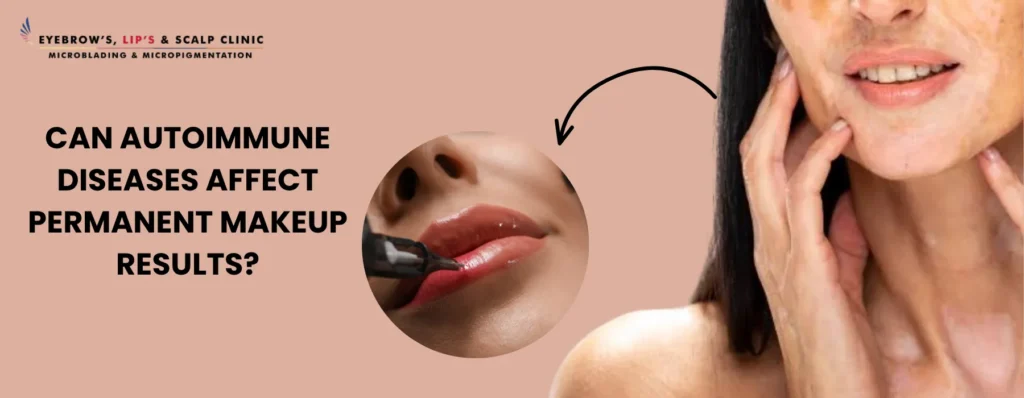
Many autoimmune conditions are treated with medications that regulate or suppress the immune system. While these medications are important for overall health, they may also influence how the skin responds after permanent makeup.
Certain medications may:
This does not automatically prevent treatment, but it highlights why discussing medications during consultation is essential.
Every permanent makeup procedure affects the skin differently.
Microblading creates fine hair-like strokes using a manual tool. Individuals with autoimmune diseases affecting skin healing may experience uneven pigment retention or slower recovery.
Lips are highly vascular and naturally sensitive. Autoimmune conditions that increase inflammation may prolong swelling or healing, making careful aftercare especially important.
Scalp micropigmentation is generally well tolerated, but active scalp psoriasis, eczema, or inflammatory skin conditions should be evaluated before treatment.
One of the biggest misconceptions is that the name of the autoimmune disease determines whether permanent makeup is possible.
In reality, disease stability is often the deciding factor.
Someone with well-controlled rheumatoid arthritis may heal normally, while another person experiencing an active lupus flare may not be an appropriate candidate at that time.
This is why reputable clinics focus on your current health status, not simply the diagnosis.
Although patch testing cannot predict every reaction, it remains an important safety measure, especially for clients with autoimmune conditions.
A patch test helps assess:
While passing a patch test does not guarantee identical healing across the treatment area, it provides valuable information before proceeding.
For individuals with autoimmune diseases, following aftercare instructions carefully is essential.
This typically includes:
Careful aftercare supports healthy healing and improves pigment retention.
Permanent makeup should never be approached as a one-size-fits-all cosmetic treatment, especially for clients with underlying medical conditions.
At Eyebrows Lips & Scalp Clinic, every treatment begins with a comprehensive consultation to understand medical history, medications, skin health, and treatment goals.
Instead of focusing only on aesthetics, the clinic prioritizes safety, realistic expectations, and individualized treatment planning. If additional medical guidance is needed, clients may be advised to consult their treating physician before scheduling a procedure.
This careful, patient-first approach helps ensure that permanent makeup is performed only when it is appropriate and likely to achieve safe, natural-looking results.
Yes, many people with well-controlled autoimmune diseases can safely undergo permanent makeup. However, suitability depends on the specific condition, current health status, medications, and skin healing ability. A professional consultation and, in some cases, medical clearance are recommended before treatment.
Conditions such as lupus, rheumatoid arthritis, psoriasis, vitiligo, Hashimoto’s thyroiditis, multiple sclerosis, Crohn’s disease, and type 1 diabetes may influence healing differently. The severity of the condition and whether it is well controlled are more important than the diagnosis itself.
Yes. Certain immune-suppressing medications may slow healing or influence how the skin retains pigment. Some individuals may require additional touch-up sessions because pigment retention can vary depending on medication and immune response.
Microblading may be suitable for some individuals with stable autoimmune conditions. A detailed consultation, skin assessment, and review of medical history help determine whether the procedure is appropriate and whether any precautions are needed.
Yes. Permanent makeup is generally not recommended during active flare-ups or when the immune system is under increased stress. Waiting until the condition is stable helps reduce healing complications and improves treatment outcomes.
Yes. Active psoriasis or eczema in the treatment area may interfere with healing and pigment retention. Treatment is usually postponed until the skin has recovered and the condition is well controlled.
Medical history helps identify conditions, medications, allergies, and healing concerns that could affect the safety or success of the procedure. This information allows practitioners to customize the treatment plan and determine whether permanent makeup is appropriate.
Some individuals with stable vitiligo may be candidates for permanent makeup, while others may require additional evaluation. Treatment decisions depend on disease activity, affected areas, and recommendations from both the treating physician and the practitioner.
Follow all aftercare instructions carefully, attend follow-up appointments, avoid picking the treated area, protect it from excessive sun exposure, and inform your practitioner about any unexpected changes during healing. Maintaining good overall health also supports recovery.
Having an autoimmune disease does not automatically prevent you from enjoying the benefits of permanent makeup. However, it does require thoughtful evaluation, honest communication, and personalized planning.
The success of eyebrow microblading, lip micropigmentation, or scalp micropigmentation depends on multiple factors, including disease stability, medications, skin condition, and professional expertise.
Choosing an experienced clinic that prioritizes consultation and safety can make a significant difference in both your healing experience and long-term satisfaction.
Book Your Consultation with Dr. Shalthiel Sathe →
Besides Chirayu Hospital, Aabai Tower, Flat No. 203, Datta Mandir Road, Shankar Kalat Nagar, Wakad, Pune +91-9146708856 Monday to Sunday | 11:00 AM – 8:00 PM
WhatsApp us