

Last updated: August 23, 2026
Scalp micropigmentation (SMP) can make certain fully healed, stable scalp scars less noticeable by placing carefully matched pigment around and over the scar to reduce the contrast between the scar and surrounding scalp. It does not remove scar tissue or restore hair follicles, and suitability depends on scar type, texture, color, maturity, and scalp condition.
Scalp scars can be difficult to conceal, particularly when they result in visible areas of reduced hair density. Surgical scars from hair transplantation, injuries, previous scalp procedures, and some forms of scarring alopecia can remain noticeable even after the skin has completely healed.
This is where scalp micropigmentation (SMP) may have a role.
SMP is a cosmetic camouflage technique that uses carefully placed pigment dots to create the visual impression of hair follicles or greater density. Medical literature describes SMP as a method that can be used to camouflage scalp scars and areas of localized hair loss.
However, an important distinction should be made:
SMP does not actually remove a scar. It camouflages its appearance.
The quality of the result depends heavily on the scar’s characteristics, pigment selection, treatment depth, dot placement, and practitioner expertise.
Scalp Micropigmentation for Scars can help camouflage certain healed scalp scars by reducing the visible contrast between the scar and surrounding hair. It works particularly well for suitable hair-transplant, surgical, and injury-related scars. SMP doesn’t remove the scar, but with proper assessment, pigment matching, and technique, it can make the affected area appear more uniform and less noticeable.
Scalp micropigmentation for scars is a specialized form of cosmetic scalp pigmentation designed to reduce the visual contrast between a scar and the surrounding scalp.
Instead of attempting to change the underlying scar tissue, the PMU artist strategically places small pigment deposits to mimic the appearance of closely cropped hair follicles.
For a scar that appears lighter or more visible because surrounding hair is absent, carefully planned SMP can make the area visually blend with the surrounding scalp.
Research and clinical reviews have reported the use of scalp micropigmentation for scalp scars following hair transplantation, trauma, surgery, and certain forms of scarring alopecia.
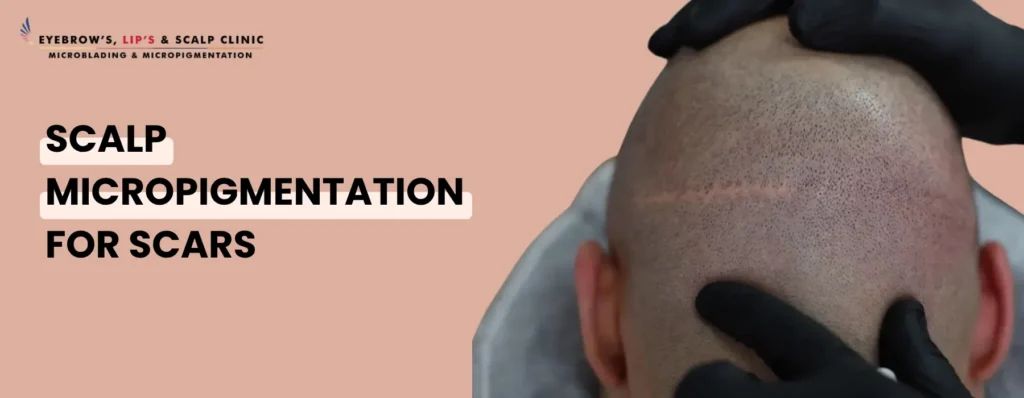
Yes, SMP can improve the appearance of certain scars but it does not physically improve the scar tissue itself.
This distinction is important.
SMP may help:
It cannot:
The goal is therefore camouflage rather than scar removal.
Not every scar is suitable for SMP.
Scars following FUT/strip hair transplantation are one of the situations in which scalp micropigmentation may be particularly useful.
A linear scar at the back of the scalp can become more visible when hair is cut short. SMP can be used to reduce the contrast between the scar and surrounding scalp.
Although FUE generally produces small individual extraction scars rather than one continuous linear scar, visible areas of reduced density may sometimes benefit from pigmentation.
The approach depends on the number, size, distribution, and visibility of the scars.
Fully healed scars resulting from trauma or scalp surgery may sometimes be camouflaged if their characteristics are appropriate for pigmentation.
SMP has also been described as a camouflage option for certain forms of scarring alopecia. However, active or progressive scarring alopecia requires medical assessment first. SMP should not be viewed as a treatment for the underlying inflammatory or autoimmune disease.
Scar characteristics matter enormously.
SMP may be less possible when a scar is:
A scar can have a different surface structure from normal scalp skin. Because pigment interacts differently with scar tissue, the same technique used on normal scalp may not produce the same result. This is one reason scar assessment should happen before treatment rather than assuming every scar can be pigmented.
This is one of the situations where SMP can potentially provide a noticeable cosmetic benefit.
A lighter scar creates a strong contrast against surrounding hair and scalp. Carefully matched pigmentation can reduce that contrast.
However, the pigment should not simply be applied as a solid block of color.
Instead, the practitioner generally needs to consider:
The objective is to make the scar less visually obvious, not to create a visible patch of pigment.
Yes. Scar texture can significantly influence the final result.
Normal scalp skin and scar tissue do not necessarily behave the same way when pigment is introduced.
Some scars are:
The texture can affect how pigment appears after healing.

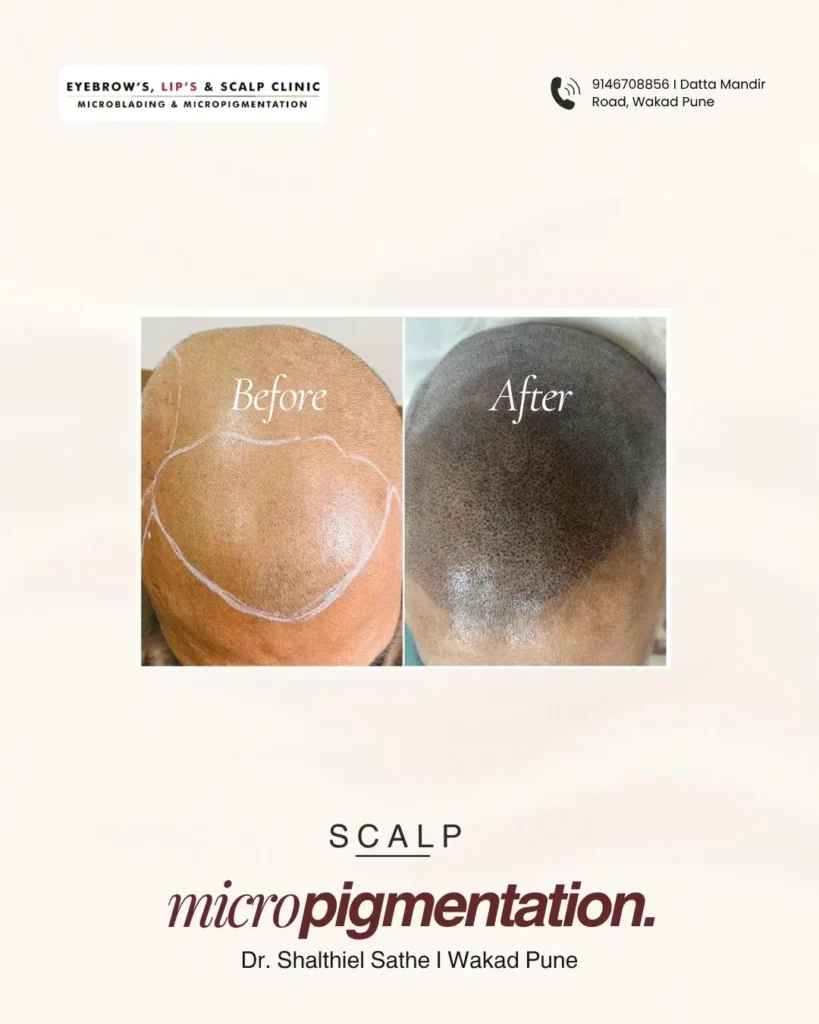
Scalp micropigmentation for general hair thinning and SMP for scar camouflage are related but not identical applications.
With ordinary SMP, the practitioner is generally creating the appearance of follicular density across relatively consistent scalp tissue.
With scar camouflage, the practitioner must account for the difference between scar tissue and surrounding skin.
Important considerations include:
Too superficial and pigment may not retain appropriately; too deep can increase the risk of unwanted spreading or other complications.
The dots need to remain visually compatible with the surrounding follicular pattern.
Uniform spacing can look artificial. Natural follicular patterns have variation.
The pigment must complement the surrounding scalp and hair rather than simply matching the scar.
Blending the treated area into surrounding scalp can help prevent an obvious boundary between pigmented and untreated skin.
No procedure can guarantee complete scar concealment.
SMP can make a scar substantially less noticeable in suitable cases, but the final appearance depends on the scar itself and how the pigment heals.
A scar may still be visible:
A reputable practitioner should therefore discuss camouflage and realistic improvement, rather than promising that the scar will disappear completely.
The number of sessions varies for Scar camouflage.
Scar tissue may require a gradual approach because pigment retention can differ from normal scalp skin.
Depending on the scar and treatment plan, multiple sessions may be used to:
Clinical studies of SMP commonly use multiple treatment sessions to build the desired appearance gradually.
Scar camouflage requires considerably more planning than simply matching a pigment to the skin.
At Eyebrows Lips & Scalp Clinic in Pune, a scar-focused SMP consultation should assess the scar’s maturity, texture, color, width, surrounding hair density, scalp tone, and overall stability before recommending treatment.
The treatment plan can then be customized around the individual’s scalp characteristics rather than applying a standard SMP pattern.
For clients with a history of hair transplantation, surgery, trauma, or scarring alopecia, this assessment-first approach is particularly important because the same SMP technique may not be appropriate for every type of scar.
The clinic’s objective should be to create visual blending and a natural follicular effect, while setting realistic expectations that SMP camouflages a scar rather than removing it.
Scalp micropigmentation can improve the appearance of certain fully healed scalp scars by reducing the contrast between the scar and surrounding scalp.
It can be particularly useful for selected hair-transplant scars, surgical scars, trauma-related scars, and stable areas of scarring alopecia.
But SMP is camouflage—not scar removal.
The best candidates are generally those with a stable, fully healed scar whose texture and color allow predictable cosmetic blending. A detailed assessment is essential because scar tissue can behave differently from normal scalp skin.
When performed with appropriate pigment selection, controlled technique, realistic expectations, and careful aftercare, SMP can be a valuable cosmetic option for people who want to make scalp scars less noticeable.
Related Blogs:
Yes. Scalp micropigmentation can make suitable, fully healed scalp scars less noticeable by depositing pigment that reduces the contrast between the scar and surrounding scalp. It does not remove the scar or restore damaged hair follicles. The result depends on scar type, texture, color, and practitioner technique.
Yes, SMP can be used to camouflage selected hair-transplant scars, including linear scars after FUT procedures and some visible FUE scarring. The scar should be fully healed and stable.
No. SMP does not remove, flatten, or medically treat scar tissue. It is a cosmetic camouflage technique that changes the visual contrast between a scar and surrounding scalp
Raised scars require careful assessment and may not be ideal candidates for SMP. Significant differences in scar texture can affect pigment retention and the final appearance.
There is no universal waiting period because scar maturation varies between individuals and types of injury. SMP should only be considered once the scar is fully healed, stable, and free from active inflammation or infection.
Yes. Women with suitable, fully healed scalp scars after hair transplantation may also consider SMP. The treatment can be adapted to the individual’s hairstyle and existing hair density.
SMP may be particularly useful for reducing the contrast created by lighter scars. However, pigment selection should consider the surrounding scalp, natural hair color, skin undertone, and scar characteristics
SMP can sometimes camouflage stable areas of scarring alopecia, but it does not treat the underlying disease. Active or progressive scarring alopecia should first be evaluated and managed medically.
It can look natural when pigment density, dot size, placement, depth, and color are carefully customized. Scar tissue can behave differently from normal scalp, so results may be less predictable.
WhatsApp us