
Vitiligo Treatment in Pune | Best Vitiligo Treatment Clinic in Pune Eyebrows, Lips & Scalp

Reviewed by Dr. Shalthiel Sathe
Last updated: September 2, 2026
Table of Contents
Vitiligo is one of the most misunderstood skin conditions in dermatology. It isn’t contagious, it isn’t caused by poor hygiene, and it isn’t a sign of any internal disease — yet the visible white patches it leaves on the skin can carry an enormous emotional and social burden. For residents of Pune looking for reliable, science-based care, understanding how vitiligo works and what modern treatment can (and cannot) achieve is the first step toward managing it with confidence.
This guide walks through what vitiligo is, why sensitive areas like the eyebrows, lips, and scalp need special attention, the treatment options available today, and how to choose the right vitiligo treatment clinic in Pune.
This article breaks down exactly what ombre powder brows are, how they compare to microblading, what they cost in Pune, how healing actually goes week by week, and what separates a genuinely top-rated PMU studio from one that just says it is.
Vitiligo is a chronic skin condition in which melanocytes — the cells responsible for producing melanin, the pigment that gives skin, hair, and eyes their color — are destroyed or stop functioning. This results in smooth, well-defined white patches on the skin. It can appear at any age, though it’s most commonly first noticed in people under 30, and it affects all skin types and ethnicities.
The exact cause isn’t fully understood, but researchers generally consider it an autoimmune condition, where the body’s own immune system mistakenly attacks melanocytes. Genetic predisposition, oxidative stress, and environmental triggers (such as sunburn, skin trauma, or significant stress) are all thought to play contributing roles. Vitiligo often appears symmetrically, though it can also affect just one area or side of the body (segmental vitiligo).
Importantly, vitiligo is not:
- Contagious
- Caused by what you eat
- A form of leprosy (a common myth in many communities)
- Purely cosmetic — it can have real psychological impact worth taking seriously
Why Eyebrows, Lips, and Scalp Need a Different Approach
Vitiligo can affect any part of the body, but patches on the eyebrows, lips, and scalp tend to be more visible, more emotionally distressing, and technically more challenging to treat than patches on covered areas of the body. Here’s why each region needs a tailored strategy.
Eyebrow Vitiligo
The eyebrows frame the face, so even a small patch of depigmentation here is immediately noticeable. Additionally, eyebrow hair itself may lose pigment (leukotrichia), which complicates treatment because restoring skin color doesn’t always restore hair color. Clinics addressing eyebrow vitiligo typically combine medical repigmentation therapy for the skin with cosmetic solutions — such as micropigmentation (a form of semi-permanent tattooing) — for the hair itself when hair repigmentation is limited.
Lip Vitiligo (Lip-Tip Vitiligo)
Lip vitiligo, sometimes part of what dermatologists call “lip-tip” vitiligo (where it also affects the fingertips), is notoriously one of the harder-to-treat patterns. The lips have a different skin structure — thinner, with a distinct mucosal transition zone — which responds more slowly to standard repigmentation therapies. Localized treatments, targeted phototherapy devices, and sometimes surgical pigment transplantation are used here, often requiring more patience and multiple treatment cycles.
Scalp Vitiligo
Scalp vitiligo can be tricky simply because hair coverage makes it harder to monitor and treat consistently. Topical treatments need to be applied directly to the skin, which means parting hair carefully, and phototherapy devices need to reach the scalp skin without being blocked by hair density. In some cases, scalp vitiligo is combined with poliosis (whitening of the hair itself), which again may need cosmetic camouflage or hair-pigmentation solutions alongside medical therapy.
Because these three areas involve thinner skin, cosmetic sensitivity, and sometimes hair pigment loss in addition to skin pigment loss, a vitiligo treatment clinic that has specific, demonstrated experience in these regions — not just general body vitiligo — makes a meaningful difference in outcomes.
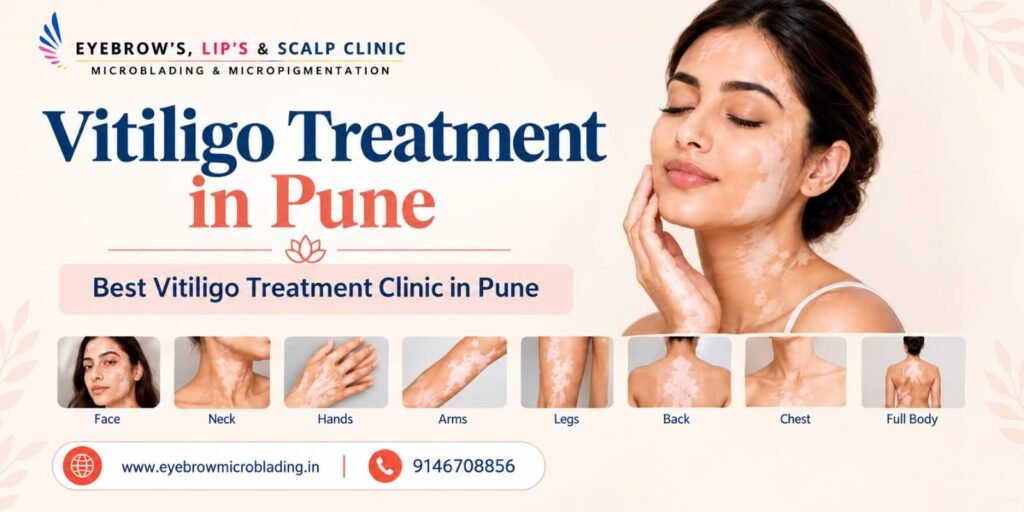
Vitiligo treatment has advanced considerably over the past two decades. While there is no universal cure that works identically for everyone, a combination approach — tailored to the patient’s age, skin type, extent of patches, and how long the condition has been active — can achieve significant, sometimes near-complete, repigmentation for many patients. Common options include:
- Topical Therapies Topical corticosteroids and calcineurin inhibitors (like tacrolimus) are frequently the first line of treatment, especially for facial vitiligo, since facial skin tends to respond better than skin over joints or bony areas. These work by calming the localized immune response that’s attacking melanocytes.
- Phototherapy (NB-UVB) Narrowband UVB phototherapy is considered one of the most effective and widely used treatments for active, spreading vitiligo. It works by stimulating the melanocytes that remain in the skin and in hair follicles to migrate and repopulate the depigmented patch. Treatment usually requires two to three sessions a week over several months, and it’s especially useful for facial and neck areas, including around the lips and eyebrows.
- Excimer Laser A more targeted form of UVB therapy, excimer laser treatment is ideal for smaller, localized patches — making it particularly well-suited to spot treatment of the lips, eyebrows, and hairline areas of the scalp, where broader phototherapy devices may be less precise.
- Oral and Systemic Medication In cases where vitiligo is actively spreading, short courses of oral corticosteroids or other immunomodulatory medications may be used to stabilize the condition before starting repigmentation therapy.
- Surgical / Pigment Transplantation Techniques: For stable, long-standing patches that haven’t responded to medical therapy — a common scenario with lip vitiligo — surgical options like melanocyte-keratinocyte transplantation, punch grafting, or blister grafting can be considered. These techniques transplant pigment-producing cells from an unaffected area of the patient’s own skin into the vitiligo patch.
- Camouflage and Cosmetic Solutions: For areas where hair pigment loss (leukotrichia or poliosis) doesn’t respond fully to medical treatment, cosmetic camouflage — including specialized skin-colored concealers and micropigmentation for eyebrows or scalp — offers an effective way to restore natural appearance while medical therapy continues in the background.
- Depigmentation Therapy In rare cases of extensive vitiligo covering most of the body, some patients opt for the reverse approach — depigmenting the remaining normal skin to achieve an even skin tone. This is a significant decision usually reserved for widespread, long-standing cases.
What to Expect During Treatment?
Vitiligo treatment is rarely a quick fix. Most effective therapies, particularly phototherapy, require realistic expectations set over a three-to-twelve-month window, with gradual, incremental improvement rather than overnight results. Facial areas — including eyebrows and lips — generally respond faster and more completely than areas like the hands, feet, or joints, which is encouraging for patients primarily concerned about visible facial patches.
A good treatment plan typically starts with:
- A thorough skin examination, sometimes using a Wood’s lamp to map the exact extent of depigmentation
- Assessment of whether the vitiligo is currently active/spreading or stable
- Blood tests, in some cases, to rule out associated autoimmune conditions (like thyroid disorders, which have a known association with vitiligo)
- A customized combination plan — for example, topical treatment plus phototherapy, or excimer laser for small facial patches plus camouflage support for eyebrow hair
Choosing the Right Vitiligo Treatment Clinic in Pune
Pune has grown into a hub for dermatological and cosmetic care, with several clinics offering vitiligo-specific treatment programs. When evaluating a clinic, especially for delicate areas like the eyebrows, lips, and scalp, consider the following:
- Dermatologist-led care: Vitiligo management should be overseen by a qualified dermatologist with specific experience treating pigmentation disorders, not a general cosmetic practitioner.
- Range of technology available: Look for clinics offering NB-UVB phototherapy and excimer laser on-site, since relying on a single modality can limit results for stubborn areas like the lips.
- Experience with facial and hair-bearing areas: Ask directly about the clinic’s experience treating eyebrow and scalp vitiligo, since these regions involve hair pigment considerations that body vitiligo treatment doesn’t.
- Realistic communication: A trustworthy clinic will set honest expectations about timelines and likely outcomes rather than promising guaranteed, rapid repigmentation.
- Integrated cosmetic support: Since full hair repigmentation isn’t always achievable, clinics that also offer camouflage or micropigmentation options can provide a complete solution rather than a purely medical one.
- Follow-up and monitoring: Vitiligo can be an ongoing condition; clinics that offer structured follow-up to monitor progress and adjust treatment tend to deliver better long-term results than one-time treatment providers.
Living With Vitiligo: Beyond the Skin
While medical treatment can meaningfully reduce and, in many cases, largely restore pigmentation, it’s worth acknowledging that living with vitiligo — particularly on visible areas like the face — often comes with an emotional dimension. Support groups, counseling, and simply connecting with others who understand the condition can be just as valuable as the medical treatment itself. Many clinics in Pune now recognize this and offer counseling support alongside dermatological care.
Conclusion
Vitiligo on the eyebrows, lips, or scalp presents unique challenges — but it is far from untreatable. With the right combination of medical therapy, patience, and, when needed, cosmetic support, many patients see substantial improvement in the appearance and confidence they were hoping for. If you’re exploring vitiligo treatment in Pune, prioritize a clinic with genuine dermatological expertise, a range of treatment technologies, and honest, individualized guidance rather than one-size-fits-all promises.
Frequently Asked Questions
Is vitiligo curable?
There is no guaranteed, permanent cure for vitiligo, but many patients achieve significant repigmentation with the right combination of treatments, especially when started early. Facial areas generally respond better than areas like the hands and feet.
How long does vitiligo treatment usually take to show results?
Most treatments, particularly phototherapy, need consistent sessions over three to twelve months before visible improvement appears. Progress is gradual, and results vary depending on how long the patches have been present and how active the condition is.
How long do ombre powder brows last?
Yes. The mucosal skin on the lips responds more slowly to standard repigmentation therapies compared to facial skin elsewhere. Lip vitiligo often needs a longer treatment course, targeted therapies like excimer laser, and sometimes surgical options for stable, long-standing patches.
Can eyebrow hair regain its color once it turns white from vitiligo?
Not always. Restoring pigment to the skin doesn’t automatically restore pigment to the hair follicle. When eyebrow hair (leukotrichia) doesn’t repigment with medical treatment, cosmetic options like micropigmentation are often used alongside ongoing therapy.
Does vitiligo spread if left untreated?
It can, though the pattern varies widely from person to person. Some cases stay limited to a small patch for years, while others spread more noticeably. A dermatologist can assess whether your vitiligo is currently active or stable, which also affects which treatments are appropriate.
Is vitiligo related to any other health conditions?
Vitiligo is associated with an increased likelihood of other autoimmune conditions, particularly thyroid disorders. This is why some clinics recommend basic blood tests as part of the initial evaluation, even though vitiligo itself doesn’t indicate poor internal health.
Are the treatments for facial vitiligo (eyebrows, lips, scalp) painful?
Most standard treatments — topical therapy, NB-UVB phototherapy, and excimer laser — are non-invasive and generally well tolerated, with at most mild, temporary redness similar to a light sunburn. Surgical pigment transplantation, used less often for stable patches, involves minor procedures with local anesthesia.