

Permanent Makeup Aftercare: Top 5 Tips for Better Healing

Reviewed by Dr. Shalthiel Sathe
Last updated: September 30, 2026
Table of Contents
You choose semi-permanent makeup to save time and feel confident. Then healing starts, and the questions pile up. Can you wash your face? Why is the colour flaking? When is it safe to sweat again?
Poor permanent makeup aftercare is one of the most common reasons pigment fades unevenly, and you can prevent it. This guide shares the permanent makeup aftercare instructions our doctors give every client, based on 11+ years of hands-on experience in our Semi Permanent clinic. You will learn the healing timeline, our top 5 tips for better permanent makeup healing, and the mistakes to avoid.
Permanent makeup aftercare is the set of steps you follow after a pigmentation session. Keep the area clean, dry, and protected. Apply only the recommended balm. Avoid sun, sweat, and picking. Attend your touch-up at 4 to 8 weeks.
What Is Permanent Makeup Aftercare and Why Does It Matter?
Permanent makeup places pigment in the upper layers of your skin. That creates a controlled micro-wound, so your skin needs time to close, repair, and hold the colour.
Good aftercare helps you:
- Lower the risk of infection and irritation
- Keep pigment from lifting during the scabbing phase
- Get even, crisp, longer-lasting colour
- Cut down the number of corrective sessions
Two clients can have the same procedure and very different results. The difference is usually how they treat the skin in the first two weeks.
Healing varies with skin type, age, and lifestyle. Our guide to the best skin types for microblading healing explains why oily, dry, and sensitive skin heal differently. This is the general pattern we see in clinic.
Days 1 to 3: Fresh and Intense
The area looks darker and bolder than the final result. Mild redness, tightness, and slight swelling are normal. You may see light oozing of clear fluid.
Days 4 to 7: Flaking and Itching
Tiny flakes form as the skin renews. The colour can look patchy or very dark. Itching is common. Do not scratch.
Days 8 to 14: The Ghost Phase
Flakes fall off, and the colour appears to fade or vanish. This is normal. The pigment is settling under a new layer of skin.
Weeks 4 to 8: True Colour Appears
The shade softens and stabilises. This is the right time for your touch-up, which fine-tunes shape, density, and colour.
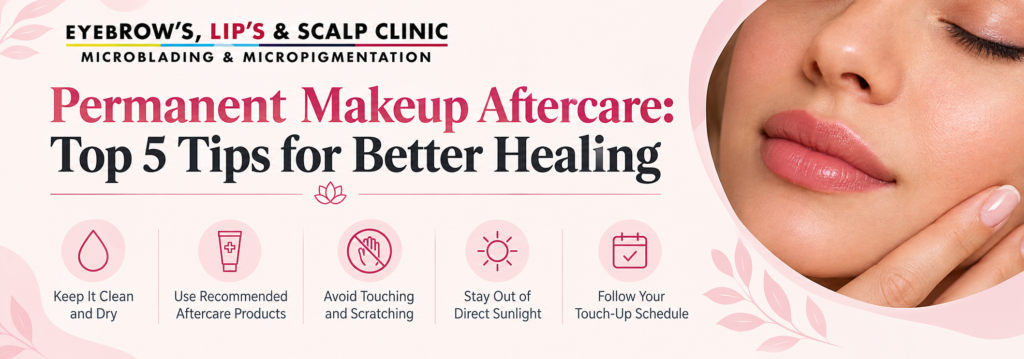
Top 5 Permanent Makeup Aftercare Tips for Better Healing
1. Keep the Treated Area Clean and Dry
Clean skin heals faster. For the first 24 hours, keep the area dry. After that, cleanse gently with lukewarm water and the mild cleanser your practitioner recommends. Pat dry with a clean tissue. Never rub.
For the first week, avoid:
- Direct shower spray on the treated area
- Swimming pools, steam rooms, and saunas
- Soaking the area in water
Always wash your hands before touching the treated area.
2. Apply Only the Recommended Balm, and Keep It Thin
Skin that is too dry cracks. Skin that is too greasy can lose pigment. Apply a very thin layer of the balm or ointment we prescribe, usually once or twice a day. Use a clean cotton swab.
A thin layer keeps the area comfortable while still letting it breathe. Heavy layers can trap moisture and slow healing. Do not use random creams from home, especially those with fragrance, acids, or active ingredients.
3. Do Not Pick, Scratch, or Peel
This is the hardest tip to follow and the most important one. Flakes protect the new pigment. If you pull one off early, you can pull the colour with it. That leaves bald spots and uneven tone.
If itching bothers you:
- Tap the area gently with a clean fingertip
- Ask us about a suitable soothing products
- Keep your hands away, especially at night
Let every flake fall off on its own.
4. Protecting Your Skin from Sun, Sweat, and Makeup
Sunlight breaks down pigment and can change its tone over time. Sweat and friction can irritate healing skin.
For the first 7 to 10 days:
- Avoid direct sun. Use a hat or cap when you go out.
- Skip intense workouts and hot yoga
- Keep makeup, sunscreen, and skincare products off the treated area unless we advise otherwise
After healing, use a broad-spectrum sunscreen on the area every day. This is the simplest way to keep colour looking fresh for years.
5. Skip Harsh Products and Attend Your Touch-Up
Retinol, glycolic acid, salicylic acid, scrubs, peels, and laser treatments can fade pigment quickly. Avoid them on the treated area during healing and ask your practitioner before restarting them.
Book your follow-up at 4 to 8 weeks. Touch-ups are a normal part of the process, not a sign that something went wrong. Skin heals differently in different spots, and a second session evens out the colour. You can read more about how the process works in our guide on what microblading is and how it works.
Permanent Makeup Aftercare Instructions by Treatment
The core rules stay the same. A few details change by area.
Eyebrows
- Avoid wetting your brows when washing your face and hair
- Sleep on your back if you can, to prevent rubbing on the pillow
- Do not use brow pencils, gels, or tinting during healing
- Skip threading, waxing, and plucking near the area
If you are planning microblading eyebrows in Pune, ask for your written aftercare plan at the consultation.
Lips
- Drink through a straw for the first few days
- Avoid very hot, spicy, or salty food
- Do not kiss or share utensils during the first week
- Never peel dry skin off your lips
Getting a lip blush before a wedding? Our guide to lip micropigmentation for brides explains how to plan your timeline. For treatment details, see our page on lip blush process, benefits, and cost.
Scalp
- Avoid sweating, dust, and helmets for the first few days
- Follow our washing schedule exactly before shampooing
- Keep the scalp out of direct sun and cover it with a clean, loose cap
- Do not scratch or scrub the scalp
Learn what to expect from scalp micropigmentation before your session so you can prepare your routine.
Normal Healing vs Warning Signs
Most healing feels a little uncomfortable but looks predictable. Here is how to tell what is normal.
Normal during permanent makeup healing:
- Mild redness and swelling in the first 48 hours
- Tightness and light flaking
- Colour that looks darker, then fades by 30 to 50 percent
Call your practitioner if you notice:
- Increasing pain, heat, or swelling after day 3
- Yellow or green discharge, or a bad smell
- Fever or red streaks spreading from the area
- Severe itching, hives, or rash
Rare side effects can happen with any cosmetic procedure. Our overview of the benefits of micropigmentation and its side effects covers what to watch for and how to reduce your risk. If something feels wrong, contact us early. Quick action prevents most complications.
Common Aftercare Mistakes to Avoid
We see the same mistakes again and again:
- Applying too much ointment
- Using old creams or home remedies
- Exposing the area to the sun or a swimming pool
- Picking scabs and flakes
- Wearing makeup over healing skin
- Skipping the touch-up appointment
Avoid these and your permanent makeup healing will be smoother and your results more even.
Conclusion
Great pigment work only shows its full value when the healing goes well. Keep the area clean and dry, use a thin layer of the right balm, resist picking, protect your skin from sun and sweat, and attend your touch-up. These five habits make the biggest difference to your final result.
If you are planning your first session or need guidance during healing, book a consultation with Dr. Shalthiel Sathe and Dr. Poonam Sathe at Eyebrows, Lips & Scalp Clinic in Wakad, Pune. We will design your treatment and your aftercare plan together.
Frequently Asked Questions
How long does permanent makeup healing take?
Surface healing usually takes 7 to 14 days. The colour continues to settle for 4 to 8 weeks. Full results are judged after your touch-up session.
Can I wash my face after permanent makeup?
Yes, but carefully. Keep the area dry for the first 24 hours. After that, cleanse gently with lukewarm water and a mild cleanser as advised. Avoid direct water spray and rubbing for the first week.
What should I avoid after permanent makeup?
Avoid picking flakes, sun exposure, swimming, saunas, heavy sweating, makeup on the area, and products with retinol or acids. Follow the exact plan your practitioner gives you.
When can I wear makeup after permanent makeup?
Wait until the surface has fully healed, usually 10 to 14 days. Applying makeup on healing skin can cause irritation and infection, and it can lift pigment. Follow your practitioner’s schedule for the treated area.
Is it normal for the colour to fade or disappear during healing?
Yes. Colour often looks very dark in the first week, then fades by 30 to 50 percent as flakes fall off. The shade returns and settles between 4 and 8 weeks. This is a normal part of permanent makeup healing, so wait for the touch-up before judging the result.
Can I sleep normally after a permanent makeup procedure?
Yes, with small changes. Sleep on your back with a clean pillowcase for the first few nights. This reduces rubbing, sweat, and pigment loss. Change your pillowcase often during the first week.
When can I exercise after permanent makeup?
Avoid intense workouts, hot yoga, and heavy sweating for 7 to 10 days. Sweat can irritate healing skin and disturb the pigment. Light walking is usually fine if you keep the area clean and protected.
Can I use sunscreen on permanent makeup?
Not during the first 7 to 10 days, unless your practitioner says so. After the area heals, use a broad-spectrum sunscreen daily. Sun exposure is a leading cause of fading and colour change, so this is a key part of long-term permanent makeup aftercare.