Thin vs. Thick Eyebrows: Which Style Suits Your Face Shape Best?

Reviewed by Dr. Shalthiel Sathe
Last updated: October 27 2026
Table of Contents
Choosing between thin and thick eyebrows can feel surprisingly difficult. A sharply defined, narrow brow may look elegant on one person, while a fuller brow can frame another person’s features more naturally. The best choice is not simply the trendiest one: it depends on your natural brow growth, facial proportions, hair texture, and the look you prefer. This guide explains how to compare thin vs. thick eyebrows, choose a shape for your face, and understand the options for enhancing sparse areas.
Thin and thick eyebrows can both enhance your facial features when shaped to suit your face shape. Thin eyebrows create a delicate, defined appearance, while thick eyebrows offer a fuller, more natural look. The best eyebrow style depends on your face shape, natural brow growth, and personal preference. A professional eyebrow specialist can help you choose a balanced shape that complements your features
Thin vs. Thick Eyebrows | What Is the Difference?
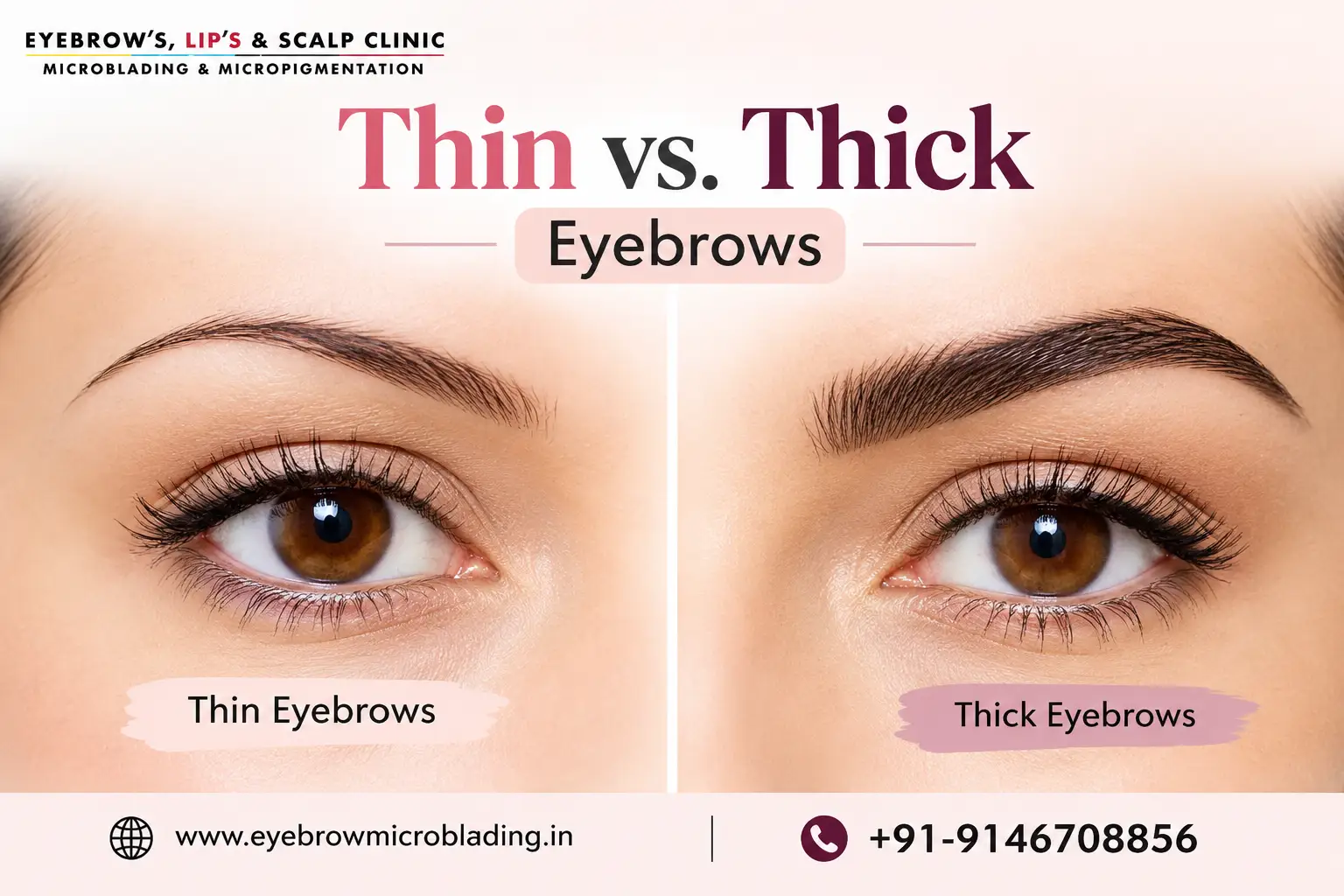
Thin eyebrows have a narrow outline and usually contain less visible brow hair. They can create a delicate, defined appearance, particularly when shaped carefully. Thick eyebrows have greater natural density or a wider outline and can give the upper face a stronger frame.
Neither style is automatically better. Brow shape, arch placement, colour, and the distance between the brows and eyes can matter as much as thickness.
Thin eyebrows
- A fine, precise outline.
- A more understated look when the shape suits the face.
- Potentially less daily grooming for people whose natural growth is already sparse.
- A risk of looking overly narrow if too much hair is removed.
Thick eyebrows
- A fuller, more noticeable frame around the eyes.
- A more natural hair texture when the density is genuine.
- More grooming may be needed if hairs grow in different directions.
- Excessive width or a very dark fill can overpower some facial features.
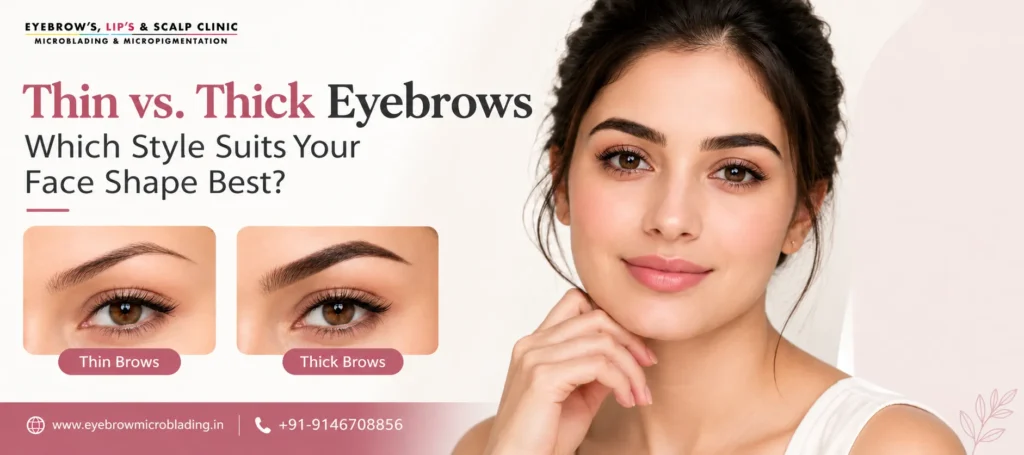
Face-shape advice is a starting point, not a strict rule. Most people have a mix of features, and the most flattering brow often follows their natural growth pattern.
1. Round face
A softly angled brow with a gentle arch may add definition to a round face. Avoid forcing an extremely high arch if it looks unnatural on your features. Medium fullness can provide structure without making the brow appear too heavy.
2. Oval face
Oval faces often work with several brow shapes. A natural, softly arched brow can maintain balance without needing dramatic changes. Keep the brow’s front, arch, and tail in proportion rather than focusing only on thickness.
3. Square face
A soft arch or gently curved brow can complement a more angular jawline. Medium-to-full brows may look balanced, but a very dark, sharply squared front can create a harsher effect. Blending the front of the brow usually looks softer than drawing a solid block.
4. Long face
A relatively flatter brow with a subtle arch may visually balance a longer face. Avoid creating an exaggerated high arch solely to follow a trend. The brow tail should still follow your natural bone structure and growth.
5. Heart-shaped face
A softly curved brow or a low, gentle arch can complement a wider forehead and narrower chin. Medium fullness may work well, although the best outline depends on the person’s eye spacing and natural brow pattern.
6. Diamond-shaped face
A curved or softly angled brow may balance prominent cheekbones. Avoid over-plucking the tail, as this can make the brow look disconnected from the rest of the face.
Thick Eyebrows vs. Thin Brows | How to Choose
When comparing thick eyebrows vs thin brows, consider these practical factors:
- Natural density: Work with the hair you have rather than repeatedly removing hair to force a narrow shape.
- Hair colour: Very dark filling can make brows appear thicker than they are. A shade close to your natural brow hair often looks softer.
- Eye spacing: The distance between the brows and eyes can affect how a shape reads on your face.
- Maintenance: Fuller brows may need trimming or brushing; thinner brows may require filling if there are visible gaps.
- Personal preference: A shape should feel comfortable to wear without daily pressure to follow a trend.
A simple way to test a new shape
Before making a long-lasting change, use a brow pencil or removable makeup to sketch a slightly fuller or narrower outline. View it in natural light and from different angles. Avoid removing a large amount of hair at once; regrowth can be unpredictable, and repeated over-plucking may contribute to sparse areas.
How to Make Thin Eyebrows Look Fuller
If your brows are naturally thin or have gaps, start with low-commitment options:
- Brush the hairs into place. A clean spoolie can help reveal the natural shape.
- Use light, hair-like strokes. Avoid drawing a single solid line across the brow.
- Choose a suitable shade. A colour that is too dark may look harsh.
- Avoid repeated over-plucking. Give the brow time to grow before deciding which hairs need shaping.
- Seek advice for sudden hair loss. If thinning is new, patchy, or accompanied by skin changes, consult a qualified healthcare professional rather than assuming it is only a cosmetic issue.
For people considering a longer-lasting cosmetic option, eyebrow microblading in Pune is one service to learn about. Microblading places pigment into the skin to create the appearance of fine brow hairs; suitability, risks, and likely results should be discussed during an individual consultation.
How to Manage Naturally Thick Eyebrows
Thick brows do not necessarily need to be made thinner. Small adjustments can help them look tidy while preserving their natural density.
- Brush hairs upward and outward to understand their growth pattern.
- Trim only visibly long hairs, conservatively.
- Remove stray hairs outside the intended outline rather than repeatedly thinning the main brow.
- Use a clear or lightly tinted brow gel if you want to keep hairs in place.
- Avoid making both brows look identical at the expense of their natural differences.
If you are unsure where the arch or tail should sit, a trained brow professional can help map a shape before any hair is removed.
Eyebrow Extensions vs. Microblading | What Is the Difference?
The phrase “eyebrow extensions vs microblading” describes two different approaches, and the exact method offered can vary by provider.
Eyebrow extensions generally involve attaching individual hairs or fibres to existing brow hairs or the skin with an adhesive. They are temporary and may need careful maintenance. Adhesives can irritate sensitive skin, and the result depends on the product and application technique.
Microblading is a semi-permanent cosmetic pigmentation procedure. A practitioner uses a handheld tool to place pigment in the skin in fine strokes designed to resemble brow hairs. It involves skin penetration, so hygiene, skin suitability, pigment choice, informed consent, and aftercare are important. Results fade over time and vary by individual.
Neither option is suitable for everyone. Ask about the materials used, expected maintenance, possible reactions, practitioner training, and what happens if you are unhappy with the shape. You can also read about covering existing eyebrow tattooing with microblading if you already have cosmetic pigment in the area.
For a different hair-stroke approach, learn about nano brows and how they compare with microblading. A consultation should explain the differences without promising a particular outcome.
When Should You Consider Professional Advice?
A consultation may be useful if you have very sparse brows, uneven growth, an old tattoo, scarring, sensitive skin, or uncertainty about which technique is suitable. Ask the practitioner to explain the procedure, likely limitations, risks, hygiene measures, aftercare, and available alternatives.
Cosmetic pigmentation is not the same as treating the cause of eyebrow hair loss. If your brows become thinner suddenly, develop bald patches, or the surrounding skin becomes itchy, inflamed, or scaly, seek medical advice. Conditions such as skin disorders or other health issues can contribute to hair loss, and the cause should be assessed when appropriate. For background on cosmetic brow options when alopecia is involved, see the clinic’s microblading for alopecia information; this does not replace medical assessment of the cause of hair loss.
Explore the clinic’s eyebrow microblading service for general procedure information. An individual assessment is needed to determine whether a treatment is appropriate.
Conclusion
The choice between thin vs. thick eyebrows comes down to proportion, natural growth, grooming preferences, and the style you feel most comfortable wearing. Round faces may suit a gentle arch, while flatter or softer shapes may complement other facial structures but these are guidelines, not rules. Test changes with makeup before deciding, and seek professional advice if you are considering cosmetic pigmentation or experiencing unexplained brow thinning.
Frequently Asked Questions
Are thin or thick eyebrows more attractive?
There is no single best thickness for everyone. A balanced shape that complements your natural features and personal preference is generally more useful than following a trend.
Which eyebrow shape suits a round face?
A softly angled brow with a gentle arch can add definition, but the best shape also depends on natural hair growth, eye spacing, and individual facial proportions.
Can thin eyebrows become thick again?
Some brows become fuller when over-plucking stops, but regrowth varies. Long-term hair loss, scarring, or certain health conditions can affect regrowth. Seek medical advice for sudden or unexplained thinning.
Is microblading better than eyebrow extensions?
They are different methods. Extensions are usually temporary and involve attaching hairs or fibres, while microblading deposits pigment into the skin. The appropriate choice depends on skin suitability, desired appearance, maintenance, and tolerance for risks.
Does microblading suit every face shape?
No single technique suits everyone. Brow mapping and an individual consultation can help assess shape, skin, existing pigment, and expectations, but no specific result can be guaranteed.
Should I pluck my eyebrows to match a face-shape guide?
Use face-shape guides as inspiration, not a strict formula. Remove hair conservatively and avoid repeatedly over-plucking, especially if your brows are already sparse.
What should I ask before a semi-permanent eyebrow procedure?
Ask who performs the procedure, what training they have, how instruments are sterilised or disposed of, which pigments are used, what risks apply to you, how aftercare works, and what alternatives are available. Share relevant allergies, skin conditions, medicines, and previous cosmetic tattooing.
Can an old eyebrow tattoo be covered with microblading?
Sometimes, but it depends on the colour, darkness, shape, pigment depth, and skin condition. Dark or discoloured pigment may need another approach first. Assessment is important before deciding.