Types of Permanent Eyebrows | Microblading vs 3D vs Ombre vs Nano Brows

Reviewed by Dr. Shalthiel Sathe
Last updated: October 28 2026
Table of Contents
Search for permanent eyebrows, and you will meet four names at once: microblading, 3D, ombre, and nano. They sound similar. They are not.
Each technique places pigment differently, gives a different finish, and suits different skin. This guide explains the types of permanent eyebrows in plain language, so you walk into a consultation knowing what to ask.
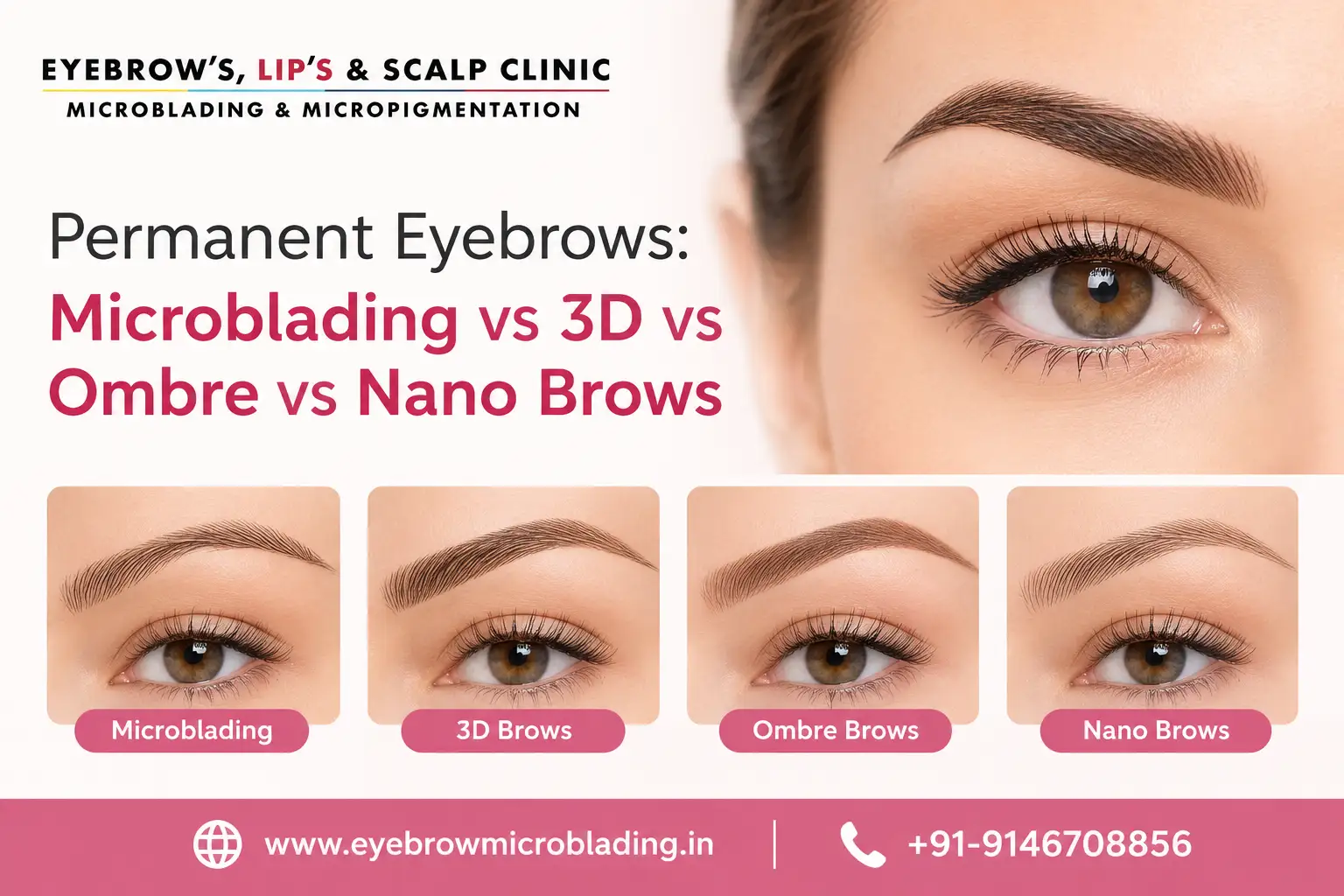
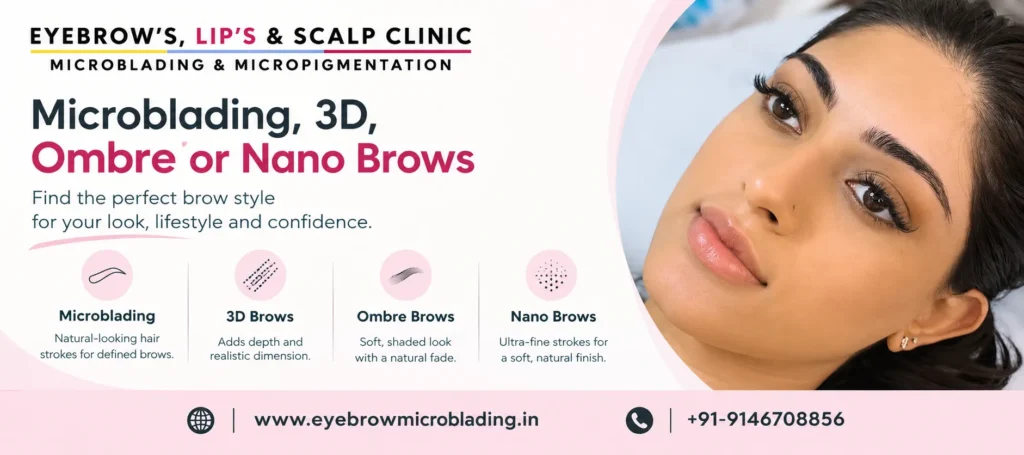
Permanent eyebrow techniques include Microblading, 3D Brows, Ombre Brows, and Nano Brows. Microblading creates natural, hair-like strokes, while 3D Brows add depth and dimension. Ombre Brows offer a soft, powder-filled makeup effect, and Nano Brows use a machine to create fine, realistic strokes. The right technique depends on your skin type, desired look, and eyebrow goals. Consult a qualified professional to choose the most suitable option.
What Are the Types of Permanent Eyebrows?
The four common types are microblading, 3D brows, ombre powder brows, and nano brows.
- Microblading: hair-like strokes made with a hand tool.
- 3D brows: strokes plus soft shading, often called combination brows.
- Ombre powder brows: a soft, filled-in, makeup-like finish made with a machine.
- Nano brows: very fine, machine-made hair strokes.
Feature | Microblading | 3D Brows | Ombre Powder | Nano Brows |
Tool | Manual handheld blade | Blade plus shading (method varies) | Digital machine | Digital machine, fine needle |
Finish | Crisp hair strokes | Strokes with soft depth | Soft, powdered fade | Fine, subtle strokes |
Look | Natural, defined | Fuller, dimensional | Makeup-like | Natural, delicate |
Often considered for | Sparse or patchy brows | Brows needing shape and density | Wanting a filled, soft look | Wanting finer strokes |
Skin type note | Usually discussed for normal to dry skin | Depends on the mix | Often discussed for oily skin | Depends on skin texture |
Touch-up | Usually planned | Usually planned | Usually planned | Usually planned |
Microblading
How it works
A practitioner uses a small handheld tool with fine blades. It creates thin lines in the upper skin layer and deposits pigment along them.
The strokes are drawn to follow your natural hair.
What it looks like
Think of individually drawn hairs. The finish is crisp when new and softens as it heals.
Who usually asks about it
- People with sparse or uneven brows
- People who like a natural, brushed-up look
- Those with a gap, scar or over-plucked area to fill
If you want to compare it with other methods on the clinic’s own page, see eyebrow microblading in Pune.
3D Eyebrows
How it works
“3D” is a marketing term than a technical one. In most studios, it means hair strokes combined with light shading, which is why they are also called combination brows.
The mixing can be done with a blade, a machine, or both. Ask which one your practitioner uses.
What it looks like
Strokes at the front and arch, softer shading through the body. The goal is depth, so brows look less flat in photos and in person.
Worth asking
- Which parts are strokes and which are shaded?
- Which tool is used for each part?
- How will the shading look as it fades?
Ombre Powder Brows
Thick brows do not necessarily need to be made thinner. Small adjustments can help them look tidy while preserving their natural density.
- Brush hairs upward and outward to understand their growth pattern.
- Trim only visibly long hairs, conservatively.
- Remove stray hairs outside the intended outline rather than repeatedly thinning the main brow.
- Use a clear or lightly tinted brow gel if you want to keep hairs in place.
- Avoid making both brows look identical at the expense of their natural differences.
If you are unsure where the arch or tail should sit, a trained brow professional can help map a shape before any hair is removed.
Nano Brows
How it works
Nano brows use a digital pen with a very fine single needle. The strokes are thinner and, in many cases, more even than the manual strokes.
What it looks like
Delicate hair strokes with a gentle finish. Because the tool is a machine, the depth is easier to control.
Who usually asks about it
- People who want fine strokes but are unsure about a hand tool
- People with thicker or more textured skin, where some practitioners prefer a machine
For a closer look at this method, read Nano Brows vs Microblading: Certified Specialist in Pune.
How to Choose Between the Types
No single technique is right for everyone. Four things determine the choice.
1. Your skin type
Oily skin can make fine strokes spread over time. Dry or normal skin usually holds strokes more crisply. A practitioner should check this before recommending a method.
2. Your natural brows
- Plenty of hair, only gaps: strokes or nano may be discussed.
- Very little hair: combination or shading may give more definition.
- Previous tattooing: see Can Existing Eyebrow Tattooing Be Covered With Microblading?
3. The finish you want
Natural hair, soft powder, or something in between. Bring photos of brows you like, not just names of techniques.
4. Your health and lifestyle
Some conditions and medications affect suitability. Tell the practitioner about:
- Pregnancy or breastfeeding
- Blood-thinning medicines
- Skin conditions, infections, or a tendency toward raised scars (keloids)
- Allergies, including to pigments or numbing agents
- Recent Botox or fillers near the brows
Some people choose brow PMU because of hair loss. For that situation, see the clinic’s page on eyebrow microblading for alopecia areata.
What to Expect: Procedure, Healing and Aftercare
Before
- A consultation and skin check
- A brow shape drawn and approved by you
- A pigment shade discussed is against your skin tone and hair colour
During
- A topical numbing product is commonly used
- Symptoms vary from person to person, and many describe mild scratching or stinging
- Sessions often take a couple of hours, including mapping
After
Healing varies. Typically, brows look darker at first and then soften over several weeks.
General aftercare points (your practitioner’s instructions will come first):
- Keep the area clean and dry as advised
- Avoid picking or scratching flakes
- Skip swimming, saunas, and heavy sweating in the early days
- Avoid direct sun and tanning on the area
- Attend to the planned touch-up
Conclusion
Microblading gives crisp hair-like strokes. 3D brows add shading for depth. Ombre powder creates a soft, filled finish. Nano brows use a fine machine to make delicate strokes.
The best match is the one that fits your skin, your brow hair and the look you want. A proper consultation is where that gets decided.
If you would like to discuss the options for your brows, you can contact us for a consultation or read about eyebrow microblading in Pune.
Frequently Asked Questions
Which is the best type of permanent eyebrow?
There is no single best type. The right option depends on your skin, your natural brow hair, and the finish you want. A consultation helps narrow it down.
Is 3D eyebrow different from microblading?
Often yes. 3D usually means strokes combined with shading, while classic microblading is strokes only. Because “3D” is not a standard technical term, ask what method the studio uses.
Are nano brows the same as microblading?
No. Microblading uses a manual blade. Nano brows use a digital machine with a very fine needle. Both can create a hair-stroke look.
Which type suits oily skin?
Practitioners often discuss shading-based methods such as ombre powder for oilier skin, because fine strokes can blur. This is general, so a skin assessment is needed.
Why is a touch-up needed?
Pigment can heal unevenly or fade in places. A planned touch-up lets the practitioner refine colour and density after healing.
Can permanent eyebrows be removed or changed?
They can sometimes be lightened, corrected or covered, but outcomes vary. Discuss correction options before the first session.
Can I get permanent eyebrows if I'm pregnant?
Most practitioners advise waiting. Share your pregnancy or breastfeeding status and follow medical advice.
How should I prepare for my appointment?
Avoid alcohol and blood-thinning supplements before the session unless a doctor says otherwise. Skip waxing or threading the brows for the period your practitioner advises. Bring reference photos.