
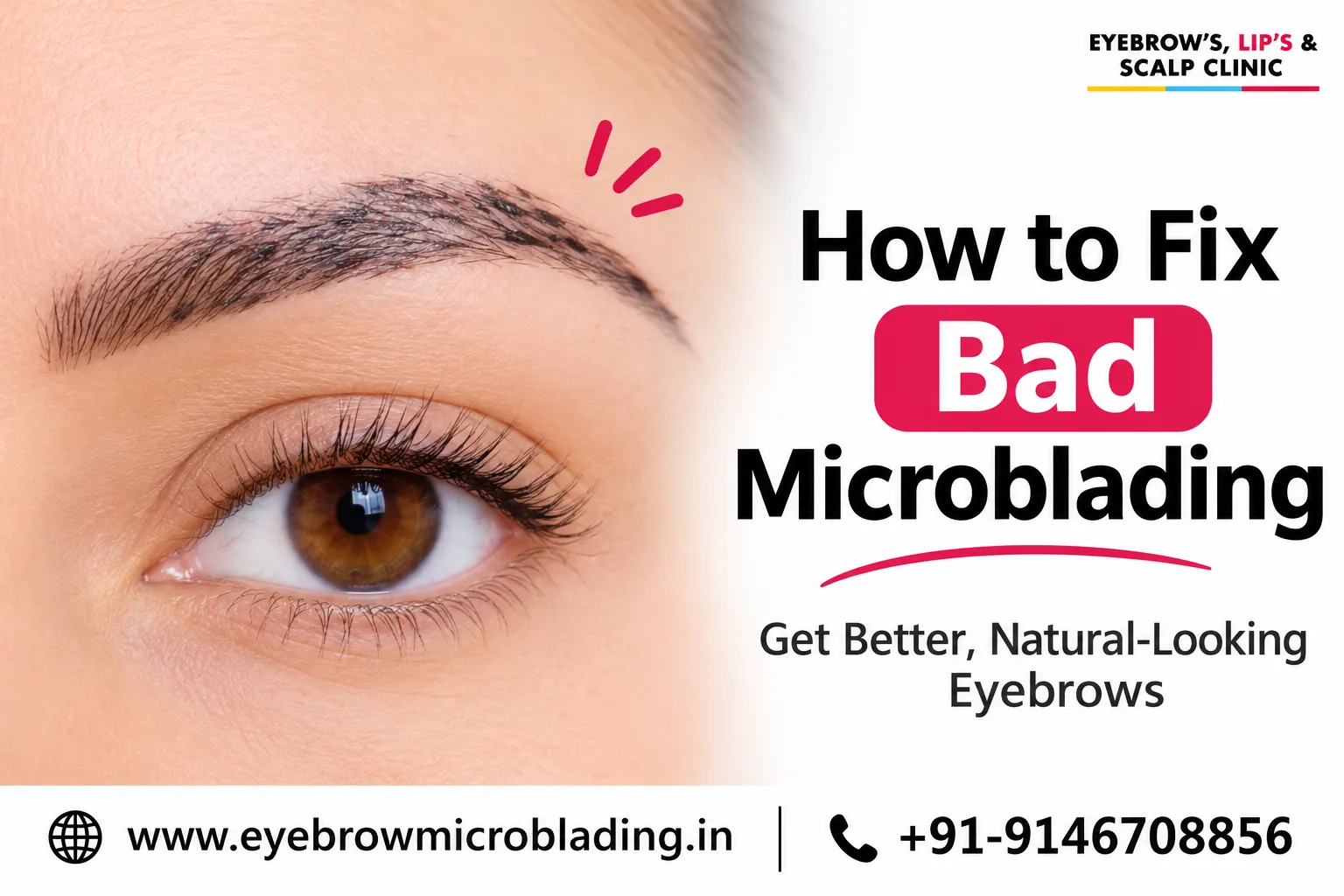
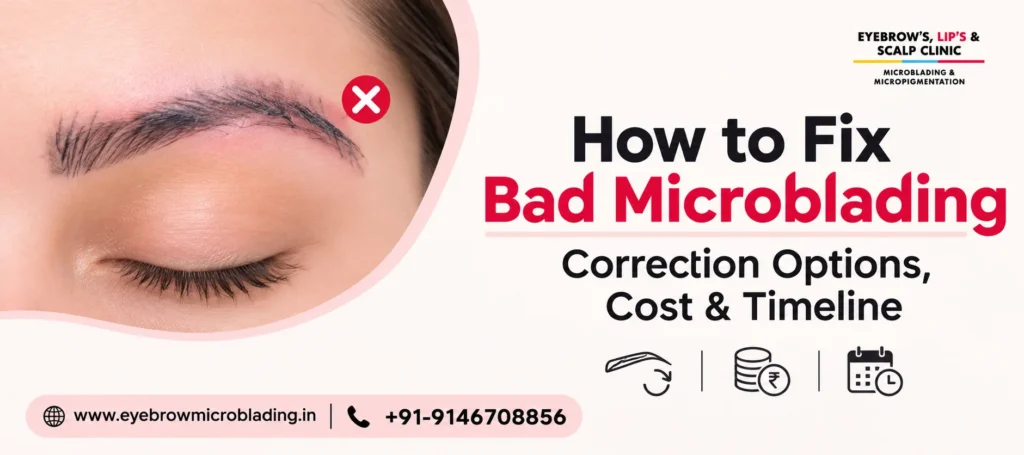
How to Fix Bad Microblading | Correction Options, Cost & Timeline

Reviewed by Dr. Shalthiel Sathe
Last updated: October 31 2026
Table of Contents
You wanted soft, natural brows. You got patchy strokes, a heavy arch, or colour that turned grey-blue.
If that sounds familiar, you are not alone. Bad microblading can often be improved, but the right fix depends on what went wrong. This article covers the causes, the correction options, cost factors, and realistic timelines.
Bad microblading can often be corrected through professional touch-ups, colour correction, reshaping, or laser removal, depending on the skin condition and pigment depth. The correction timeline may take several weeks, while complete removal can require multiple sessions. The cost varies based on the severity of the results and the treatment method. Consult an experienced microblading specialist to determine the safest correction option for natural-looking eyebrows.
What Counts as Bad Microblading?
Not every disappointment is a failure. Fresh brows look darker and sharper for the first week or two. Judge the result after healing.
Common signs of bad microblading include:
- Uneven brows that sit at different heights or have different arches
- Blurry or blotchy strokes instead of fine hair-like lines
- Colour shift, such as grey, blue, red, or orange tones
- Brows that are too dark, too thick, or too long for your face
- Patches that faded completely while other areas held
1. Wait and reassess
Give brows 4 to 8 weeks to heal fully. Many “bad” results settle as scabbing, flaking, and colour intensity calms down.
Do not request changes before this window. The skin needs to finish healing.
2. Colour correction
If tone is the problem, a skilled practitioner may use a neutralising shade over the old pigment. The goal is to shift grey, blue or orange tones towards a more natural brown.
Results depend heavily on the original pigment and how deep it sits.
3. Reshaping and filling gaps
A corrective session can often adjust mild asymmetry or patchy areas. This works best when the existing strokes are light, and the shape is close to what you want.
It is less suitable if brows are already too thick or too dark, because adding pigment cannot remove it.
4. Saline removal
A saline solution is placed into the skin to draw pigment toward the surface. It is gentler on the skin than some alternatives but usually needs several sessions.
Consider it when a laser isn’t suitable, though results vary.
5. Laser tattoo removal
Laser fragments pigment so the body can clear it. It is generally used when a shape must be reduced or colour lightened.
One caution: some iron-oxide-based brow pigments can darken or change colour under the laser. A patch test and an experienced practitioner are essential. Multiple sessions spaced weeks apart are typical.
6. Cover-up
If old brows are a problem, new pigment can sometimes be placed over lightened areas. Our article on covering an existing eyebrow tattoo with microblading explains when this is realistic.
Correction Cost | What Affects the Price
There is no fixed price, because no two corrections are alike. Fees vary by city, experience of the artist, and type of method used in the treatment.
Main cost factors include:
- Method used: colour correction, saline removal, and laser are priced differently
- Number of sessions: removal almost always needs more than one
- Size and density of the existing pigment
- Complexity: reshaping and cover-ups take longer than a simple touch-up
- Follow-up care: review visits, healing checks, and aftercare products
Timeline: How Long Does Correction Take?
These are general ranges. Your skin, pigment and chosen method will change them.
Stage | Typical timeframe |
Initial healing before any correction | 4 to 8 weeks |
Colour correction or reshaping session | Often 1 to 2 sessions, spaced weeks apart |
Saline or laser removal | Multiple sessions, usually several weeks apart |
Skin recovery between removal sessions | Several weeks each |
Full correction process | Can range from a few months to longer |
The Role of Eyebrows Lips & Scalp Clinic
Correction starts with an honest assessment, not a quick fix. At Eyebrows Lips & Scalp Clinic in Wakad, Pune, every case begins with an individual consultation.
The clinic is led by Dr. Shalthiel Sathe (PG Diploma in Clinical Cosmetology, BHMS), who has over 11 years of experience in micropigmentation. Here is how the clinic approaches a client unhappy with previous brow work.
1. Assessment and shape analysis
The first step is to understand what went wrong. Your natural brow pattern, facial structure, skin type and the existing pigment are all examined. The aim is to identify whether the issue is shape, colour, thickness or faded areas.
2. Clear, realistic guidance
You are told which options may suit your case and which may not. If a result cannot be fully reversed, that is explained upfront. No outcome is promised.
3. Planning before any procedure
Where a corrective or cover-up approach is suitable, the new shape is mapped to your face first. Pigment shade is chosen to match your skin tone and the existing colour.
4. Hygiene and safety
Procedures follow strict hygiene practices in a sanitized clinic setting, with medical-grade pigments and sterile technique.
5. Aftercare and follow-up
You receive clear aftercare guidance for healing, plus follow-up so progress can be reviewed. If something needs a different specialist, you are advised accordingly.
If you are considering a fresh start with a planned shape, you can read about the clinic’s eyebrow microblading service or book a consultation for an individual assessment.
Conclusion
Bad microblading is frustrating, but it is rarely the end of the road. Wait for full healing, identify whether the problem is shape, colour or placement, then choose the least invasive correction that fits.
Remember the essentials: healing comes first, removal takes several sessions, and costs depend on your case, not a fixed price list. Choosing flattering eyebrow shapes before any new procedure prevents a repeat.
Ready to discuss your options? You can book a consultation for an individual assessment.
Frequently Asked Questions
Can bad microblading be fixed?
Often it can be improved. The method depends on whether the issue is shape, colour, thickness or faded patches. An in-person assessment is needed.
When can I correct microblading?
Generally, after the skin has fully healed, around 4 to 8 weeks. Correcting too early can disturb healing.
Does microblading fade on its own?
Yes, gradually. Fading varies by skin type, pigment, sun exposure and aftercare, but it will not clear a poor shape or colour quickly.
Is laser removal safe on microblading?
It can be, with a trained practitioner and a patch test. Some pigments may darken, so it should not be done casually.
How many sessions does removal take?
Usually more than one. The number depends on pigment depth, colour and your skin’s response.
Can I cover bad microblading with new microblading?
Sometimes, if the old pigment is light or has been lightened first. Dark or wide brows are harder to cover.
Why did my microblading turn grey, blue or red?
Pigment can shift as it fades, and skin undertone affects how it looks. Pigment placed too deep may also appear bluish.
Can makeup hide bad microblading while I wait?
Brow makeup can soften uneven areas temporarily. Avoid applying products to healing skin and follow your practitioner’s advice.