

Last updated: July 30, 2026
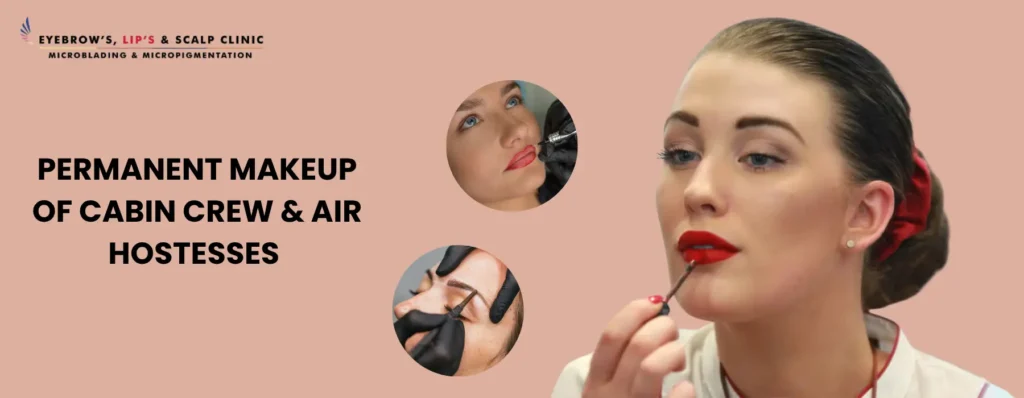
Cabin crew and air hostesses work in an environment where professional grooming, polished presentation, and a consistent appearance can be important parts of the job. Long working hours, early reporting times, frequent travel, changing climates, and limited time for personal grooming can make maintaining makeup every day challenging.
This is one reason permanent makeup (PMU) is becoming an option worth considering for professionals who want to simplify their daily beauty routine.
Treatments such as eyebrow microblading, lips micropigmentation can enhance the appearance of brows and lips while reducing the need to recreate the same look every morning.
However, permanent makeup is not simply about convenience. The procedure involves pigment implantation into the skin, so choosing an appropriate technique, understanding airline or employer grooming policies, and following professional aftercare are essential.
For cabin crew considering permanent makeup, the most important question isn’t simply “Is it worth it?” but rather:
Which treatment suits my features, lifestyle, skin type, and professional requirements?
Cabin crew members often have schedules that differ significantly from conventional office jobs.
Early-morning reporting, long-haul flights, layovers, changing time zones, dry cabin air, and frequent travel can make maintaining a consistent makeup routine inconvenient.
Permanent makeup may help simplify certain aspects of daily grooming.
Potential benefits of permanent maekup include:
However, permanent makeup does not replace all makeup. Cabin crew may still need foundation, concealer, eyeliner, mascara, blush, lipstick, or other products depending on their employer’s grooming requirements.
The appropriate option depends on the individual’s facial features, natural brows, lip pigmentation, skin type, desired appearance, and workplace requirements.
The most relevant treatments include:
Eyebrow Microblading creates fine, hair-like strokes to enhance the appearance of sparse or uneven eyebrows.
It may be suitable for cabin crew who want:
The goal should generally be natural enhancement rather than an overly bold eyebrow shape, particularly when the treatment needs to complement professional makeup.
Lip micropigmentation can enhance the appearance of the lips by adding a soft tint or helping improve the appearance of uneven pigmentation.
For cabin crew, a subtle lip treatment may be particularly attractive because it can create a more defined base underneath regular lipstick.
However, lip micropigmentation should not be considered a permanent replacement for lipstick. The healed result is generally designed to provide enhancement rather than a fully made-up lipstick appearance.
Nano brows use ultra-fine machine-created strokes designed to mimic natural eyebrow hairs. They can be a suitable option for cabin crew looking for a precise, realistic, hair-stroke appearance, particularly when natural-looking brows are a priority.
Ombre powder brows create a softly shaded, makeup-inspired eyebrow effect, usually lighter toward the front and more defined toward the tail. They may be suitable for cabin crew who prefer more defined brows that maintain a polished appearance with or without additional makeup.
Cabin crew members have some lifestyle considerations that should be discussed before treatment.
Repeated flights expose the skin to changing environments, dry cabin air, and different climates. These factors don’t automatically prevent PMU, but they can influence how comfortable the healing period feels.
An appointment should ideally be planned when the individual can dedicate sufficient time to aftercare and avoid unnecessary exposure to activities that may interfere with healing.
Some airlines may have specific grooming standards regarding eyebrow shape, makeup, colors, and overall appearance.
Therefore, permanent makeup should complement—not conflict with—your employer’s grooming policy.
In many cases, healed permanent makeup can be compatible with professional grooming. However, there is no universal airline policy covering all permanent makeup procedures.
Airlines and employers can have their own standards regarding appearance, makeup, tattoos, visible cosmetic procedures, and grooming.
Before booking a PMU procedure, cabin crew should check:
Do not assume that a treatment permitted by one airline is automatically permitted by another.
This is particularly important for applicants attending interviews or joining a new airline.
Frequent travel doesn’t automatically make someone unsuitable for PMU.
However, cabin crew should consider several factors that can influence long-term results.
Frequent travel may increase cumulative UV exposure, particularly during outdoor layovers. UV exposure can contribute to pigment fading.
Cabin crew may use skincare products regularly. Certain active ingredients, exfoliants, or treatments may affect the longevity of cosmetic pigmentation.
Moving between humid, dry, hot, and cold environments can affect skin comfort and hydration.
Frequent travel can make it harder to attend follow-up or touch-up appointments at the recommended time.
A professional consultation should therefore include discussion about the person’s travel schedule.
No. Skin type is one of the factors that should influence treatment selection.
For example, oily skin may respond differently to hair-stroke techniques than dry or normal skin. Pigment may appear softer or less sharply defined over time.
Sensitive skin may also require additional consideration.
The correct question isn’t:
“Which PMU technique is the best?”
It is:
“Which technique is most appropriate for my skin, natural features, and desired healed result?”
That distinction is essential for achieving realistic expectations.
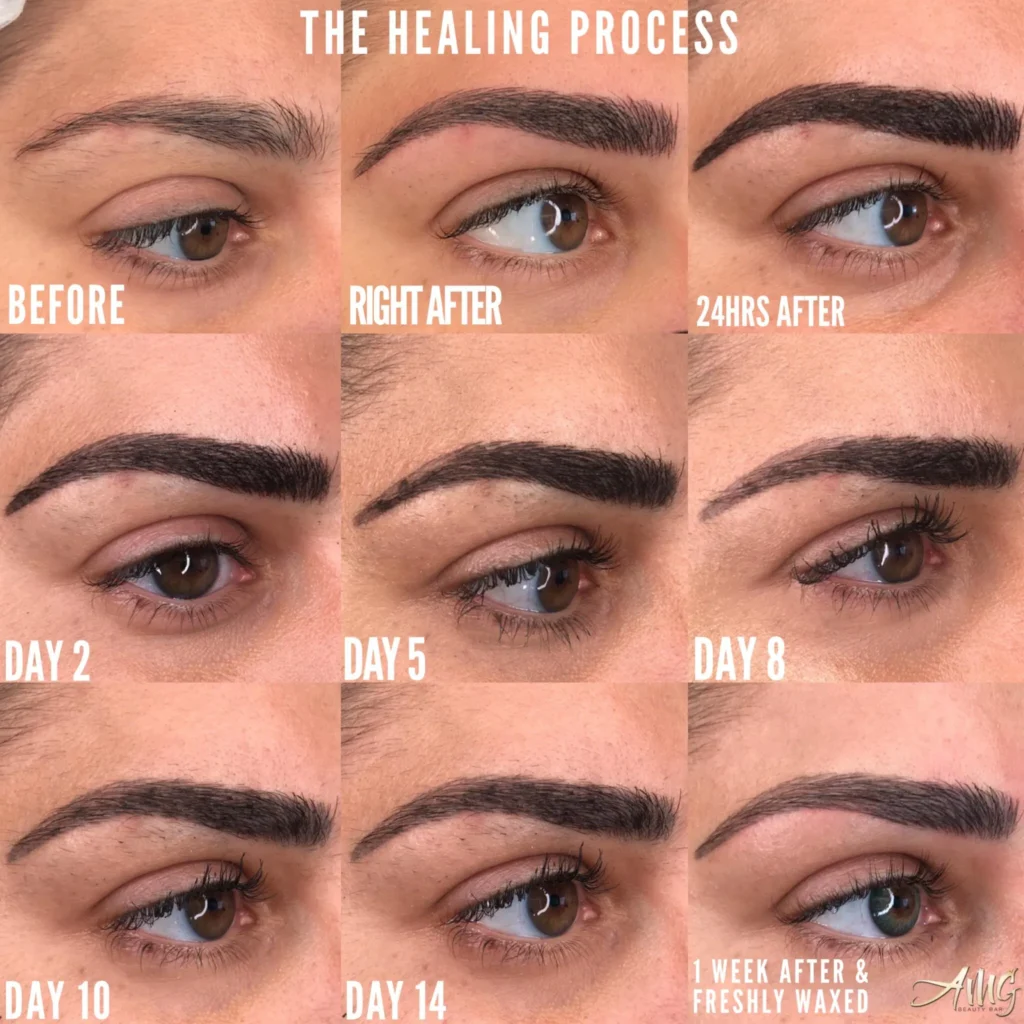
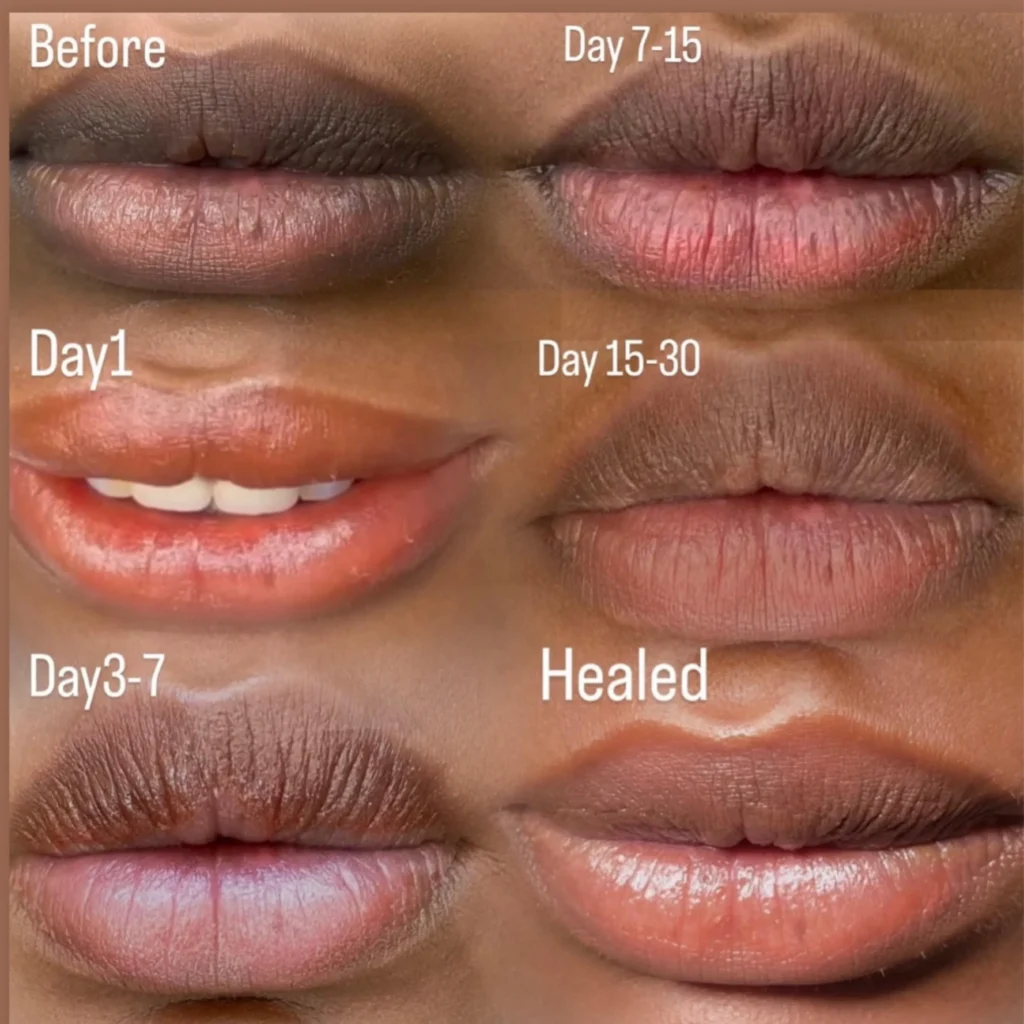
The immediate appearance of permanent makeup can differ from the final healed result.
Depending on the procedure, patients may initially experience:
The pigment generally settles and softens as the skin heals.
Do not judge the final result immediately after the procedure.
Following professional aftercare instructions is important during this stage.
Avoid booking PMU immediately before a long-haul flight or demanding work schedule.
Give yourself sufficient recovery time based on your practitioner’s instructions.
Use only the products and routine recommended by your PMU professional.
Avoid experimenting with new products during the healing period.
Flaking can be part of normal healing. Picking at the treated area can interfere with pigment retention and potentially cause skin injury.
Once healed, appropriate sun protection can help protect the appearance of cosmetic pigmentation from premature fading.
If a touch-up is recommended, schedule it when you can comfortably follow the aftercare instructions and attend follow-up care.
There is no guaranteed lifespan.
The longevity of PMU depends on factors such as:
Microblading and other forms of cosmetic pigmentation are semi-permanent rather than permanent in the traditional tattoo sense. The color gradually changes and fades, and maintenance may eventually be required.
Sometimes, yes—but correction is not as simple as changing conventional makeup.
If a person is unhappy with their PMU, the appropriate approach depends on:
Depending on the situation, correction, camouflage, lightening, or removal may be considered. This is why choosing an experienced professional before the first procedure is generally preferable to trying to fix an unsuitable result later.
Choosing a permanent makeup clinic is about more than finding attractive before-and-after photographs. The quality of the consultation, understanding of skin and facial features, pigment selection, technique, hygiene, and approach to healed results can all influence the final outcome.
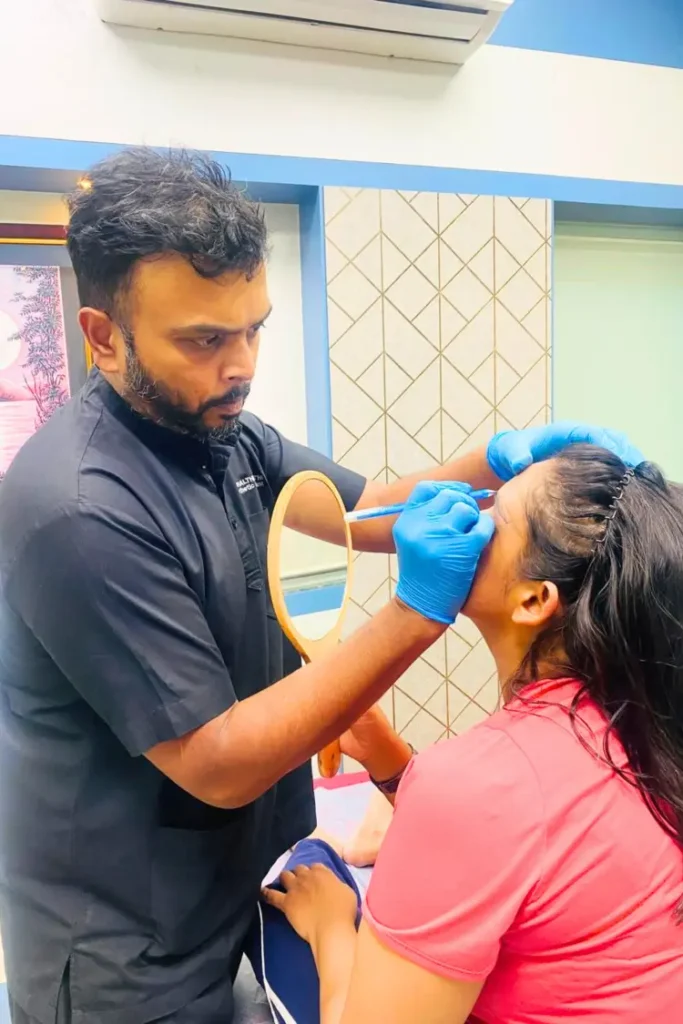
At Eyebrows Lips & Scalp Clinic in Pune, permanent makeup is approached as a personalized procedure rather than a one-style-fits-all treatment. The consultation considers factors such as facial proportions, natural eyebrow structure, skin type, existing pigmentation, lip tone, lifestyle, and the client’s preferred level of enhancement.
For cabin crew and air hostesses, particular attention can be given to achieving a polished yet natural appearance that can work alongside professional makeup. Depending on the individual’s requirements, options may include microblading, nano brows, ombre powder brows, eyebrow micropigmentation, and lip micropigmentation.
The treatment planning process should also account for your work roster, upcoming flights, healing period, and aftercare requirements. This is especially important for cabin crew who may have irregular schedules or frequent international travel.
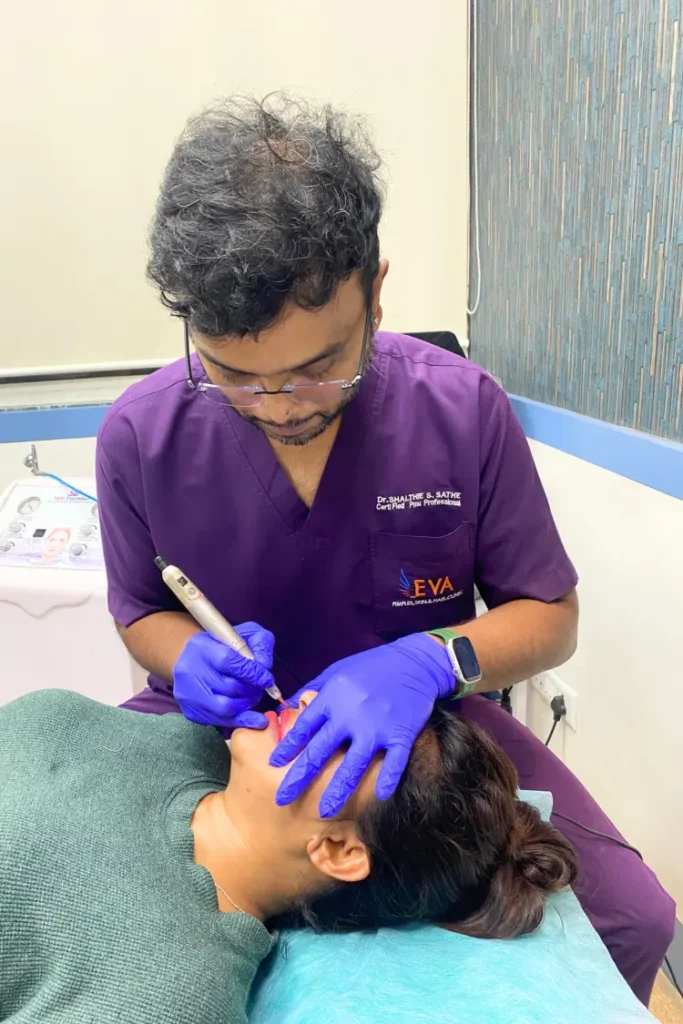
Yes, permanent makeup can be considered by cabin crew who want to simplify eyebrow or lip grooming. Suitability depends on skin type, health, desired appearance, and employer grooming requirements. The treatment should be planned around work schedules and sufficient healing time.
Yes, air hostesses can consider eyebrow microblading if it is appropriate for their skin and their airline’s grooming policy permits it. A natural-looking design can reduce the need for daily brow filling while still allowing conventional makeup to be applied.
Yes. Lip micropigmentation can enhance natural lip color and create a more even-looking base beneath regular lipstick. However, it does not necessarily replace lipstick or other makeup required by an airline’s professional grooming standards.
You can consider microblading before joining an airline, but timing is important. Freshly treated eyebrows can initially look darker and may have temporary redness or peeling. It is preferable to complete healing well before interviews, training, or joining dates.
Flying does not automatically prevent successful healing, but frequent travel can make aftercare more challenging. Dry cabin air, changing climates, long working hours, and limited recovery time should be considered when planning the procedure.
No. Permanent makeup is designed to enhance features and simplify certain grooming steps. Cabin crew may still need conventional makeup such as foundation, eyeliner, mascara, blush, or lipstick depending on their airline’s requirements.
Frequent travel itself does not necessarily cause faster fading. However, cumulative sun exposure, skincare habits, lifestyle, and individual skin characteristics can affect pigment longevity. Consistent sun protection after healing may help protect the appearance of cosmetic pigmentation.
Some people with sensitive skin may still be candidates for PMU, but sensitivity should be discussed during consultation. The practitioner can assess the skin and explain potential risks, aftercare requirements, and whether additional precautions are appropriate.
Permanent makeup can be a practical grooming option for cabin crew and air hostesses, particularly for eyebrows and lips, but it should be approached as a personalized cosmetic procedure—not a shortcut that eliminates makeup entirely.
The most important considerations are natural-looking design, skin suitability, professional technique, healing time, aftercare, and your airline’s current grooming policy.
For cabin crew in Pune, the best time to undergo permanent makeup is when your roster allows adequate healing and follow-up care—and when the chosen treatment fits both your personal preferences and professional requirements.
WhatsApp us