
Stretch Mark Camouflage Results | What to Expect

Reviewed by Dr. Shalthiel Sathe
Last updated: October 02 2026
Table of Contents
Stretch marks are common skin changes that can appear on the abdomen, thighs, hips, breasts, buttocks, and other areas of the body. Although they are harmless, their colour and texture can make them more noticeable, particularly when the marks become white or silvery against the surrounding skin.
Stretch Mark Camouflage is a specialised cosmetic pigmentation procedure designed to reduce the visible colour contrast between stretch marks and the surrounding skin. Rather than completely removing the marks, the treatment aims to make them less noticeable by creating a closer colour match with the individual’s natural skin tone.
The clinic’s permanent makeup aftercare guide also explains why healing, pigment settling, and careful aftercare matter after pigmentation procedures.
Understanding what to expect before, during, and after treatment is important. Stretch Mark Camouflage Results can vary depending on factors such as the maturity of the stretch marks, skin tone, texture, pigment selection, healing response and aftercare.
Stretch mark camouflage is a cosmetic pigmentation technique designed to make stretch marks less noticeable by blending pigment with the surrounding skin tone. Results vary based on skin type, stretch mark age, color, and individual healing. Most people see gradual improvement as the treated area heals, with final results becoming clearer over the following weeks. Multiple sessions may be recommended for more even, natural-looking results.
What Is Stretch Mark Camouflage?
Permanent makeup places pigment in the upper layers of your skin. That creates a controlled micro-wound, so your skin needs time to close, repair, and hold the colour.
Good aftercare helps you:
- Lower the risk of infection and irritation
- Keep pigment from lifting during the scabbing phase
- Get even, crisp, longer-lasting colour
- Cut down the number of corrective sessions
Two clients can have the same procedure and very different results. The difference is usually how they treat the skin in the first two weeks.
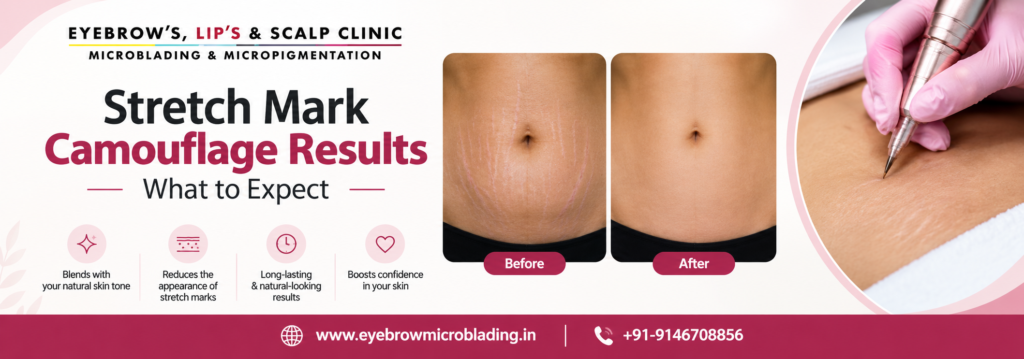
Stretch mark camouflage is a pigmentation technique intended to make mature stretch marks less visible by blending their colour with the surrounding skin.
Mature stretch marks may become pale, white or silvery over time. Because they can contrast strongly with the surrounding skin, they may remain noticeable even when the original stretching of the skin occurred years earlier.
During a stretch mark camouflage treatment, the practitioner assesses the colour and characteristics of the stretch marks and surrounding skin. A customised pigment shade is then selected and carefully applied to reduce the visible difference.
The goal is a more balanced appearance rather than creating an artificial layer over the skin.
How Stretch Mark Camouflage Works
The process begins with an assessment of the treatment area. The practitioner considers the colour, maturity and texture of the stretch marks as well as the individual’s natural skin tone and undertone.
Once the appropriate pigment has been selected, it is applied to the affected areas. The pigment then goes through a healing and settling process.
The colour immediately after treatment may not represent the final result. As the skin heals, the appearance of the pigment can change and become more subtle.
This is why follow-up assessment can be important when determining whether additional pigment or a touch-up is required.
Stretch Mark Camouflage vs. Scar Camouflage
Scar camouflage and stretch mark camouflage share a similar objective: reducing the visible difference between an area of altered skin and the surrounding skin.
Scar camouflage generally focuses on scars caused by surgery, injury or other forms of tissue damage, while stretch mark camouflage specifically focuses on stretch marks.
Both approaches require careful assessment of the skin’s colour, condition and texture. Pigmentation can help with colour contrast, but it does not necessarily remove changes in skin texture.
What Do Stretch Mark Camouflage Results Look Like?
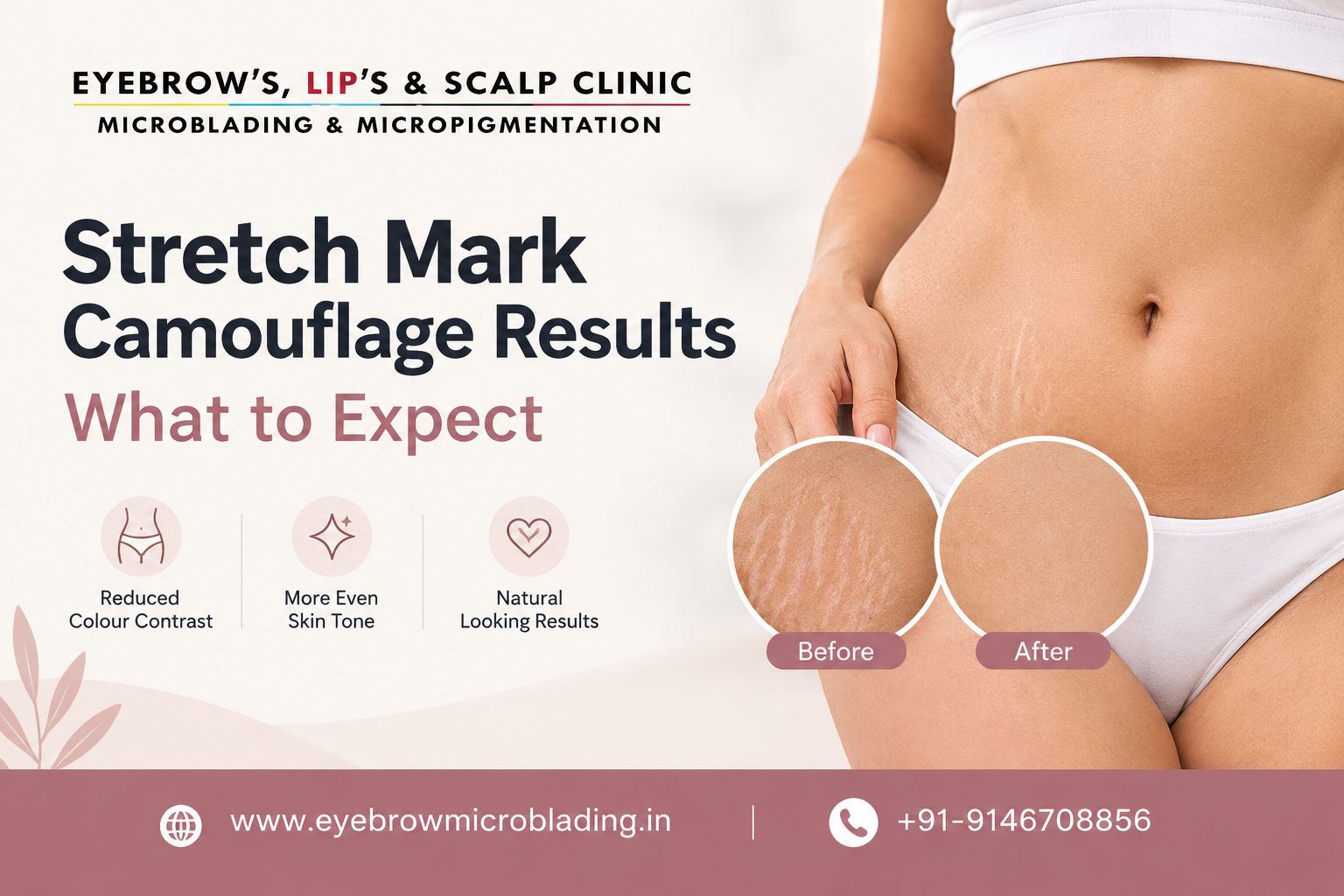
The primary goal of Stretch Mark Camouflage Results is to make the stretch marks less visually prominent.
A successful result does not necessarily mean that the stretch marks disappear completely. Instead, their colour may become closer to the surrounding skin, reducing the contrast that makes them stand out.
This distinction is important when developing realistic expectations.
Colour Blending
Colour matching is one of the most important aspects of the procedure.
For example, mature white or silvery stretch marks can appear significantly lighter than the surrounding skin. By carefully matching pigment to the surrounding complexion, the difference in colour can be reduced.
The goal is not simply to select a generic skin-coloured pigment. Skin has different undertones and can vary considerably between individuals.
What Happens to Skin Texture?
Stretch mark camouflage primarily addresses colour, not texture.
If a stretch mark is deeply indented, raised, or has noticeable textural changes, those characteristics may still be visible after pigmentation.
This means that someone may see a significant reduction in colour contrast while still being able to feel or see some of the original texture.
Understanding this difference helps prevent unrealistic expectations about what camouflage can achieve.
Why Results Differ Between People
There is no single result that applies to every individual.
The final appearance can be influenced by:
- Age and maturity of the stretch marks
- Colour of the stretch marks
- Natural skin tone
- Skin undertone
- Texture and depth
- Location of the stretch marks
- Pigment selection
- Number of treatment sessions
- Individual healing response
- Aftercare
- Future changes in the skin
For this reason, an individual assessment is important before treatment.
Step-by-Step: What Happens During Stretch Mark Camouflage Treatment?
Knowing the treatment process can make it easier to understand what happens before the final result becomes visible.
Step 1: Skin and Stretch Mark Assessment
The first stage is an assessment of the treatment area.
The practitioner may evaluate:
- Whether the stretch marks are mature
- Their colour
- Their texture
- Surrounding skin tone
- Skin condition
- Previous pigmentation or scarring
- Whether the area is currently healing or irritated
Newer stretch marks may still be changing in colour and appearance. Mature and stable marks are generally easier to assess for camouflage.
Step 2: Colour Matching
The next step involves selecting a pigment that is appropriate for the individual’s surrounding skin.
Colour matching should take into account both the visible skin tone and undertones. A suitable pigment needs to blend naturally rather than creating a noticeable patch.
This stage is particularly important because the surrounding skin may change with tanning, sun exposure and other factors.
Step 3: Pigment Application
After assessment and colour selection, pigment is carefully applied to the stretch marks.
Treatment is generally approached gradually. The practitioner can evaluate how the skin responds and how the pigment settles rather than attempting to create the final appearance immediately.
Step 4: Healing and Colour Settling
The treated area requires time to heal.
Immediately following treatment, the area may look stronger or darker than expected. Temporary redness or other changes may also occur during the early healing period.
The pigment can appear different as the skin heals and settles. Therefore, the immediate post-treatment appearance should not be considered the final result.
Step 5: Review and Touch-Up
Once the skin has healed sufficiently, the area can be reviewed.
If additional colour blending is required, a further session or touch-up may be recommended.
The number of sessions varies depending on the individual’s skin, stretch marks, pigment retention, and desired outcome.
Who May Be Suitable for Stretch Mark Camouflage?
Stretch mark camouflage is not automatically appropriate for every type of stretch mark.
A suitability assessment should consider the condition and stability of the skin.
Mature vs. New Stretch Marks
Mature stretch marks are usually lighter and more stable than newer stretch marks.
New stretch marks may appear red, pink, purple, or darker depending on the individual’s skin tone. Their appearance can continue changing as they mature.
Because of this, recently developed or actively changing stretch marks may require more time before camouflage is considered.
Skin Tone and Pigmentation
Skin tone is an important consideration when planning camouflage.
People with different complexions can respond differently to pigmentation procedures. Careful colour selection is therefore necessary to achieve a natural-looking result.
The pigment should be selected specifically for the individual’s skin rather than relying on a standard shade.
When Treatment May Need to Be Delayed
Treatment may need to be postponed if the area has:
- Active irritation
- Infection
- Open or damaged skin
- Fresh or changing stretch marks
- Significant sun exposure or tanning
- Other healing concerns
A professional should also be informed about relevant medical conditions, medications, pregnancy or breastfeeding, and a history of unusual scarring before treatment is considered.
If the skin has recently undergone another cosmetic procedure, recovery should be considered before pigmentation. The clinic explains this in its guide to microblading after chemical peels or laser treatment
Top 5 Tips for Better Healing
Proper aftercare can play an important role in the healing process and final appearance.
1. Follow the Recommended Aftercare
Follow the specific instructions provided after your treatment.
Avoid adding unfamiliar products to the area without professional guidance. The treated skin needs appropriate care while it heals.
2. Avoid Irritation During Healing
Avoid unnecessary rubbing, scratching, or picking at the treated area.
The skin needs time to recover after pigmentation. Excessive irritation may interfere with normal healing.
3. Protecting the Treated Area
Sun exposure can affect pigmentation and may contribute to changes in skin colour.
During the healing period, follow professional recommendations regarding sun exposure and protection.
4. Do Not Judge the Result Immediately
One of the most important things to remember is that the immediate appearance is not necessarily the final result.
Pigment changes may initially appear more intense before becoming more subtle as the skin heals.
Allow adequate healing time before evaluating the colour match.
5. Attend a Recommended Follow-up
A follow-up appointment allows the practitioner to assess how the pigment has settled.
If the colour requires refinement, additional treatment can be discussed after the skin has recovered.
Similar principles are discussed in the clinic’s eyebrow tattoo aftercare guidance, particularly around protecting treated skin while it heals.
How Long Do Stretch Mark Camouflage Results Last?
The longevity of camouflage varies from person to person.
Some specialist providers describe results lasting for several years, while maintenance or touch-up sessions may eventually be required.
The appearance can change over time because of:
- Natural skin ageing
- Sun exposure
- Tanning
- Weight fluctuations
- Hormonal changes
- Future stretching of the skin
- Natural pigment fading
It is therefore more accurate to view stretch mark camouflage as a long-lasting colour-blending procedure rather than a permanent removal treatment.
What Can Affect Stretch Mark Camouflage Results?
Several factors can influence the outcome.
Stretch mark maturity: Stable, mature marks are easier to assess than newly developing ones.
Colour: A strong contrast between the stretch marks and surrounding skin can make them more noticeable.
Texture: Camouflage primarily addresses colour, so indentations or raised texture may remain.
Skin tone: Pigment needs to be selected according to the individual’s complexion and undertone.
Healing: Individual skin responses can affect how the pigment settles.
Number of sessions: Some areas may require more than one treatment to achieve the desired colour balance.
Future skin changes: Pregnancy, weight changes or additional stretching may alter the appearance of the treated area.
Pigment-based camouflage can behave differently depending on skin type, pigmentation and healing response. Similar considerations are discussed in the clinic’s guide to micropigmentation for vitiligo, where colour matching and gradual treatment are also important.
The longevity of camouflage varies from person to person.
Some specialist providers describe results lasting for several years, while maintenance or touch-up sessions may eventually be required.
The appearance can change over time because of:
- Natural skin ageing
- Sun exposure
- Tanning
- Weight fluctuations
- Hormonal changes
- Future stretching of the skin
- Natural pigment fading
It is therefore more accurate to view stretch mark camouflage as a long-lasting colour-blending procedure rather than a permanent removal treatment.
Is Stretch Mark Camouflage the Best Way to Cover Stretch Marks?
For people primarily concerned about the colour contrast of mature, lighter stretch marks, camouflage may be an option to discuss with a qualified practitioner.
However, it is not necessarily suitable for every type of stretch mark.
If your main concern is significant indentation or texture rather than colour, pigmentation alone may not provide the desired appearance. A professional assessment can help determine whether camouflage is appropriate or whether another approach should be considered first.
People searching for the best body makeup to cover stretch marks should also understand the difference between temporary cosmetic coverage and pigmentation.
Body makeup can temporarily conceal the colour of stretch marks, while stretch mark camouflage is designed to provide a longer-lasting reduction in visible colour contrast.
The most appropriate approach depends on the maturity, colour, texture and condition of the stretch marks.
Conclusion
Stretch Mark Camouflage Results depend on more than simply applying pigment to lighter areas of the skin. The maturity and colour of the stretch marks, skin tone, texture, pigment selection, treatment technique, healing response, and aftercare can all influence the final appearance.
For more mature, lighter stretch marks, camouflage can help reduce the visible colour contrast and make the marks less noticeable. However, it does not completely erase stretch marks or necessarily remove their underlying texture.
A professional assessment is an important first step for anyone considering Stretch Mark Camouflage. It can help determine whether the stretch marks are suitable for treatment and establish realistic expectations about the possible outcome.
If you are considering stretch mark camouflage, book a consultation to discuss your skin, suitability, and expected results before proceeding.
Frequently Asked Questions
Can stretch marks really be camouflaged?
Yes. Mature, lighter stretch marks can sometimes be made less noticeable by reducing the colour difference between the stretch marks and surrounding skin. However, camouflage does not completely erase the stretch marks or necessarily remove their texture.
What are good Stretch Mark Camouflage Results?
Good results generally involve a reduction in the visible colour contrast between the stretch marks and surrounding skin. The aim is for the treated area to look more naturally blended rather than completely flawless.
Does stretch mark camouflage remove stretch marks?
No. Stretch mark camouflage primarily addresses colour contrast. If the stretch marks have noticeable indentations or other textural changes, those features may remain visible after treatment.
How many sessions are needed for stretch mark camouflage?
The number of sessions varies according to the treatment area, skin characteristics, pigment retention, and desired result. Some individuals may require more than one session or a later touch-up.
Are white stretch marks suitable for camouflage?
White or silvery mature stretch marks may be suitable because camouflage is designed to reduce the contrast between lighter marks and the surrounding skin. However, suitability depends on factors such as texture, skin condition, and individual pigmentation.
Can darker skin tones have stretch mark camouflage?
Yes, but skin tone and healing response need to be carefully considered. Colour selection should be personalised to the individual’s complexion and undertone.
Can I camouflage new red stretch marks?
New red, pink, or purple stretch marks may still be changing and developing. A professional assessment can determine whether the marks have matured sufficiently for camouflage or whether treatment should be delayed.
Is stretch mark camouflage permanent?
Stretch mark camouflage is considered a long-lasting pigmentation procedure rather than a permanently unchanged result. Pigment can gradually fade, and natural changes in the skin can affect the appearance over time.