
How Mature Skin Responds to Lip Micropigmentation

Reviewed by Dr. Shalthiel Sathe
Last updated: October 03 2026
Table of Contents
As lips mature, changes in texture, moisture, pigmentation, and definition can affect how they respond to cosmetic procedures such as lip micropigmentation. Understanding these changes before treatment can help you have more realistic expectations about colour, healing and the final result.
Lip micropigmentation deposits pigment into the lips to create a more even-looking tone and improve the appearance of natural lip colour. However, mature lips should not be treated as if they were identical to younger lips. Skin condition, natural pigmentation and healing response all influence the finished appearance.
Mature skin can respond well to lip micropigmentation, but factors like dryness, texture, elasticity, and natural lip pigmentation can affect healing and colour retention. Proper pigment selection, gentle technique, aftercare, and a follow-up assessment help achieve a more even-looking result.
How Lips Change With Age
Mature lips can gradually become drier, thinner and less defined. Changes in skin structure and repeated sun exposure can also contribute to differences in lip colour and texture.
Some people notice that their natural lip border appears less distinct than before. Others may see uneven pigmentation or areas that look darker or lighter.
These changes matter during lip micropigmentation because the pigment interacts with the existing lip colour and the condition of the skin underneath it.
For example, a warm pink pigment that looks one way on a light, even lip can appear different when applied over lips with a naturally deeper brown, purple or grey-brown tone. The underlying lip colour can influence how the pigment appears after healing.
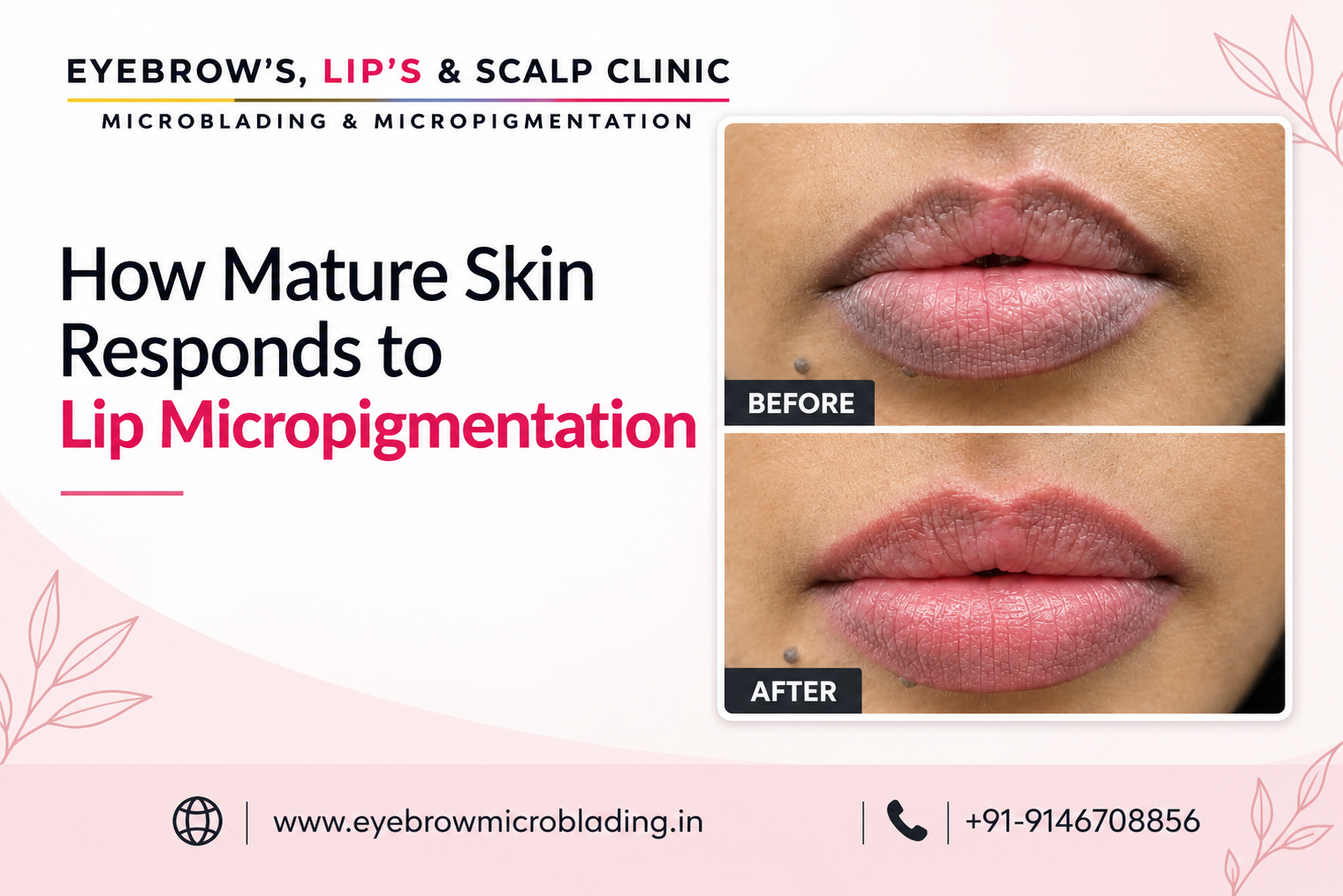
Mature skin does not automatically mean that lip micropigmentation will produce poor results. Instead, the procedure needs to account for the condition and characteristics of the lips being treated.
Skin Texture and Elasticity
With age, skin can become less elastic and the lip surface may show more visible lines or texture.
This means the practitioner needs to work carefully rather than relying on the same approach for every client. The aim should be to deposit colour appropriately without unnecessarily irritating the skin.
Aggressive or excessively deep work can increase the risk of trauma, scarring or uneven results.
Natural Lip Pigmentation
Natural lip colour is particularly important when planning treatment.
Mature lips may have uneven pigmentation caused by factors such as sun exposure, previous irritation or other underlying causes. Dark or uneven lips may therefore require a different colour strategy from naturally lighter lips.
A practitioner should assess the existing lip colour and undertone before selecting a pigment rather than simply choosing a shade from a colour chart.
Dryness and Healing
Dryness can become more noticeable with mature lips. Since peeling and dryness are normal parts of the lip micropigmentation healing process, maintaining appropriate aftercare is especially important.
During healing, lips can feel dry, tight or sensitive. Picking or pulling peeling skin can contribute to patchy pigment retention.
Choosing the Right Pigment and Colour
Colour selection is one of the most important parts of lip micropigmentation.
The final healed colour is influenced by the pigment used as well as the person’s existing lip tone and skin undertone. This is why the colour seen immediately after treatment should not be considered the final result.
For mature lips, colour selection should consider:
- Natural lip pigmentation
- Skin undertone
- Areas of uneven pigmentation
- Desired level of colour enhancement
- Existing lip texture
- How the selected pigment may appear after healing
A useful real-world example described in professional lip pigmentation guidance is that a soft warm rose can heal differently when applied over a deeper brown or grey-brown lip base. The underlying colour influences the appearance of the new pigment.
If the lips have significant natural pigmentation, colour correction or neutralisation may need to be considered before trying to achieve a particular target shade.
How the Lip Micropigmentation Technique Is Adapted
The technique should be selected according to the condition of the lips rather than age alone.
Mature lips may require a conservative approach that avoids unnecessary trauma. The practitioner should also consider existing pigmentation and the natural shape of the lips.
The objective is not to make mature lips look artificially outlined. A softly blended result generally looks more natural than a sharp pigment line extending beyond the natural lip border.
Going outside the natural lip border can also produce an unnatural appearance because facial skin and lip tissue can retain pigment differently.
Lip Micropigmentation Healing Process
Understanding the lip micropigmentation healing process is important because the colour can change considerably during the first few weeks.
Days 0–2: Fresh Colour and Swelling
Immediately after treatment, lips can look significantly brighter or darker than the expected healed result.
Mild swelling, tenderness, and tightness can occur during the first 24–48 hours. This is part of the normal response to the procedure.
At this stage, avoid judging the final colour.
Days 3–5: Dryness and Peeling
Peeling commonly begins during this stage.
The lips may feel dry, tight, or itchy, and small flakes may appear as the surface heals. Do not pick, pull, or manually remove the peeling skin.
Removing flakes prematurely can interfere with pigment retention and contribute to uneven colour.
Days 6–10: The Colour May Appear to Disappear
One of the most confusing parts of healing is when the colour seems much lighter or almost absent.
This temporary stage is often called colour ghosting. New skin can temporarily make the pigment appear less visible while the lips continue to heal.
This is why making decisions based on the appearance of the lips during the first week can be misleading.
Weeks 2–3: Colour Gradually Returns
As the newly formed skin matures, the pigment can gradually become more visible again.
The colour may not return evenly at first. One part of the lip may appear more developed than another while the healing process continues.
Weeks 4–6: Assessing the Healed Result
By approximately four to six weeks, the colour is much more useful to assess.
A six-to-eight-week review or touch-up may be recommended because the practitioner can then see how the skin retained the pigment and whether additional colour or refinement is needed.
Risks and Safety Considerations
Lip micropigmentation involves breaking the skin, so it should be treated as an invasive cosmetic procedure rather than simply a makeup application.
Normal short-term effects can include:
- Mild swelling
- Tenderness
- Dryness
- Peeling
- Temporary colour intensity
More concerning symptoms can include increasing pain, worsening swelling, spreading redness, unusual discharge, heat or other signs of infection. These should be assessed rather than dismissed as normal healing.
There can also be risks of allergic reactions, scarring, uneven pigment retention and unwanted colour changes.
People with a history of cold sores should specifically discuss this with a qualified healthcare professional before treatment because lip trauma can trigger an HSV outbreak.
How to Prepare Before Lip Micropigmentation
A good consultation should happen before the procedure. During preparation, discuss:
- Your natural lip colour and pigmentation.
- Any previous lip procedures.
- Your history of cold sores.
- Current skin irritation or inflammation around the lips.
- Medications or treatments that may affect healing.
- Your preferred colour and how natural you want the result to look.
- Whether you have previously experienced abnormal scarring.
If the lips have active inflammation, dermatitis, an active cold sore or another significant concern, treatment may need to be postponed until the condition has been assessed and settled.
Aftercare for Mature Lips
Aftercare plays an important role in the healing process.
Follow the specific instructions provided by your practitioner, but general precautions during early healing include avoiding unnecessary rubbing, picking and irritation.
Important measures include:
- Keep the lips comfortably moisturised according to the recommended aftercare plan.
- Do not pull away peeling skin.
- Avoid unnecessary friction.
- Protect healing lips from direct sun exposure.
- Avoid activities that expose the lips to excessive heat, steam or contamination.
- Keep the treatment area clean as instructed.
- Avoid applying unsuitable active skincare products around the area during healing.
The key principle is simple: allow the skin to heal naturally instead of trying to speed up peeling or colour development.
Lip Micropigmentation vs Lip Fillers
Lip micropigmentation and lip fillers address different concerns.
Lip micropigmentation primarily focuses on the appearance of lip colour and can help create a more even-looking tint.
Lip fillers are injectable treatments designed to alter lip volume and shape.
Lip micropigmentation should therefore not be considered a replacement for fillers when the main concern is loss of volume.
Likewise, fillers cannot simply replace a treatment intended to address uneven lip colour.
If someone is considering both procedures, treatment timing should be discussed with the practitioner or doctor because changes in lip shape can affect how lip colour is mapped.
What Results Can You Expect?
The final result should be assessed only after the lips have had enough time to heal.
Immediately after treatment, the colour can appear much stronger than the healed result. During the following days, peeling and temporary colour fading can make the lips appear lighter before the colour gradually becomes visible again.
For mature lips, realistic expectations are particularly important.
Lip micropigmentation does not stop natural ageing, restore lost lip volume or permanently remove every cause of pigmentation. Its purpose is primarily to introduce pigment that can improve the appearance of lip colour.
The result also depends on the original lip colour, skin characteristics, technique, aftercare and how the individual skin retains pigment.
Why a Touch-Up May Be Needed
A touch-up is often part of the initial lip micropigmentation process rather than evidence that something has gone wrong.
Once the lips have fully healed, the practitioner can identify areas where pigment retention is lighter or where the colour needs refinement.
A touch-up may be used to:
- Improve uneven pigment retention
- Refine colour intensity
- Balance areas that healed differently
- Build the desired colour gradually
The appropriate timing varies, but professional healing guidance commonly places the assessment and touch-up around six to eight weeks after the initial session.
Choosing a SPMU Expert for Lip Micropigmentation in Pune
If you are researching lip micropigmentation in Pune, do not judge a SPMU expert only by fresh, immediately-after-treatment photographs.
Ask to see healed results because fresh pigment can appear considerably stronger than the final healed colour.
Before treatment, consider asking:
- How do you select pigment for my natural lip colour?
- How do you assess my undertone?
- Can I see healed results rather than only fresh results?
- What hygiene and single-use practices are followed?
- What should I expect during the healing process?
- When will my follow-up or touch-up take place?
- What should I do if I develop unexpected swelling, pain or irritation?
For mature skin, experience with different lip colours, pigmentation patterns and skin conditions can be particularly relevant because the same pigment does not necessarily heal identically on every lip.
Conclusion
Mature lips can respond well to lip micropigmentation when the procedure is planned around their individual colour, texture, pigmentation and healing characteristics.
The most important part is understanding that the colour immediately after treatment is not the final result. Peeling, temporary fading, and gradual colour return are normal parts of the lip micropigmentation healing process, while careful colour selection and appropriate aftercare can help support an even-looking healed result.
If you are considering lip micropigmentation in Pune, start with an individual consultation so your lip condition, colour goals, and suitability can be assessed before treatment.
Frequently Asked Questions
Is lip micropigmentation suitable for mature lips?
Mature lips can be considered for lip micropigmentation, but suitability depends on the condition of the lips, natural pigmentation, medical history and individual healing factors. A proper assessment should come before treatment.
Does lip micropigmentation look natural on mature lips?
It can produce a natural-looking colour when the pigment, technique and intensity are selected appropriately. Avoiding an overly sharp outline and choosing a shade that works with the natural lip tone are important considerations.
How long does lip micropigmentation take to heal?
The visible healing process generally develops over several weeks. Peeling can occur during the first week, colour may temporarily appear lighter, and the healed result is usually assessed around four to six weeks.
.Why are my lips darker immediately after micropigmentation?
Fresh pigment and temporary inflammation can make the lips look significantly darker or brighter immediately after treatment. This is not the final healed colour.
Can mature lips become very dry after lip micropigmentation?
Dryness and sensitivity are common during early healing. Following the recommended aftercare and avoiding picking or rubbing the lips can help protect the healing skin.
Can lip micropigmentation be done on dark or pigmented lips?
It can be considered, but darker natural pigmentation may require a different colour-selection or neutralisation strategy. The existing lip colour affects how the deposited pigment appears after healing.
Is lip micropigmentation painful?
The lips are sensitive, and people can experience different levels of discomfort. Tenderness during the first few days is also possible. Pain management should be discussed with the practitioner before the procedure.
Can I get lip micropigmentation if I have a history of cold sores?
A history of cold sores should always be disclosed before treatment. Trauma to the lips can trigger an HSV outbreak, so medical advice about prevention may be appropriate.