
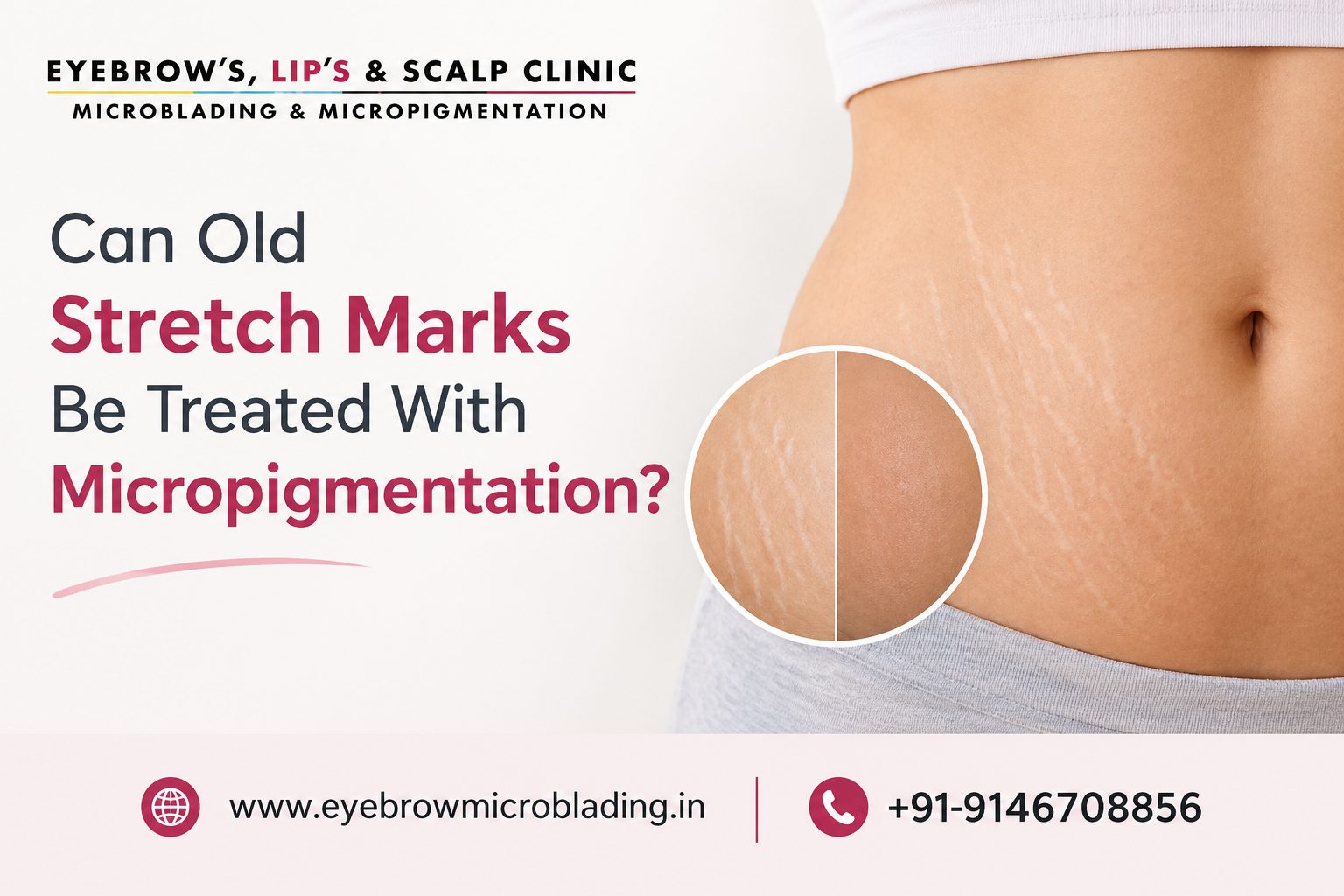
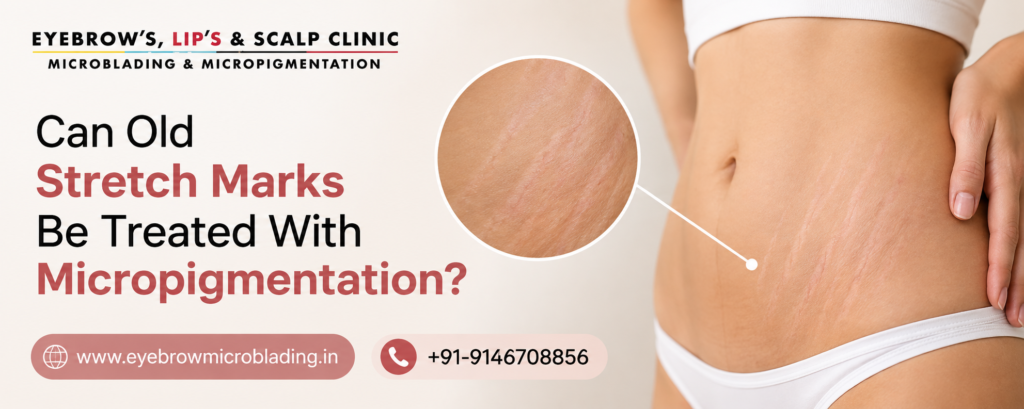
Can Old Stretch Marks Be Treated With Micropigmentation?

Reviewed by Dr. Shalthiel Sathe
Last updated: October 02 2026
Table of Contents
You’ve tried the creams. The oils. Maybe even that pricey serum a friend swore by. Yet the silvery lines on your thighs, belly, or hips haven’t moved.
Old stretch marks are stubborn, and many women assume nothing can be done once they turn white. That’s not quite true. Micropigmentation is one option, and laser is another. Here’s how each works, who each suits, and what results to expect.
Yes, old stretch marks can be treated with stretch mark micropigmentation, a cosmetic procedure that uses specialised pigments to blend the marks with the surrounding skin tone. It may help reduce their visibility, especially when the marks are fully healed and stable. However, results vary depending on skin type, stretch mark texture, and colour. Micropigmentation does not remove stretch marks completely, and a professional consultation is recommended to determine suitability.
What Are Old Stretch Marks, Really?
Stretch marks (medically called striae) form when skin stretches faster than it can adapt. Pregnancy, growth spurts, weight changes, and some medications are common triggers. The middle layer of skin, the dermis, tears slightly, and a scar forms.
They go through two stages:
- Striae rubra: Red or purple, slightly raised, and still active.
- Striae alba: White or silvery, flat or slightly sunken, and mature.
Old stretch marks are usually striae alba. They’ve lost pigment and often feel smoother or thinner than the skin around them.
Key takeaway: Old marks are mature scars. They respond differently than new ones, so the treatment has to match the stage.
it can camouflage them, but it can’t erase them.
Micropigmentation (also called medical tattooing or skin camouflage) deposits tiny amounts of pigment into the skin. For white stretch marks, the pigment is matched to your natural skin tone. The pale streaks then blend in with the skin around them.
Think of it as color correction, not scar removal. The marks are still there. They’re just far less visible. This is the idea behind any stretch marks pigmentation treatment.
How the Procedure Works
- Consultation and patch test. The practitioner assesses your skin tone and the width of your marks.
- Color matching. Medical-grade pigments are mixed to match your skin, often in several shades.
- Implantation. A fine needle places pigment into the upper dermis, usually in short sessions.
- Healing. Color looks stronger at first, then settles over several weeks.
- Touch-up. Most people need two or three sessions for even coverage.
What It Can and Can’t Do
It can:
- Reduce the contrast of white or light stretch marks
- Help the area look more even in photos and clothing
- Work on marks that haven’t responded to creams or lasers
It can’t:
- Fix texture, dents, or raised scars
- Stimulate new collagen
- Work well on very dark or deeply purple marks
- Account for tanning, since pigment doesn’t change shade as your skin does
That last point matters. If you tan easily, the camouflage may look mismatched in summer.
Stretch Marks Permanent Makeup: How Long Does It Last?
People searching for stretch marks permanent makeup often expect a lifetime fix. The reality is more modest.
Pigment gradually fades as your body clears it. Most people see noticeable fading between one and three years, depending on skin type, sun exposure, and the pigments used. Touch-ups keep the color fresh.
So it’s long-lasting, not truly permanent. If someone promises a lifetime result, be careful.
The same pigment technique is used for lip micropigmentation, scalp micropigmentation and eyebrow microblading. You can see how healed work looks on the results page.
Laser Treatment for Stretch Marks: The Main Alternative
If micropigmentation hides the problem, laser tries to improve the skin itself. That’s why laser treatment for stretch marks is the most researched option, and why it comes up in nearly every consultation.
Fractional Laser Treatment for Stretch Marks
Fractional laser treatment for stretch marks creates thousands of microscopic channels in the skin. The body responds by producing fresh collagen, which can soften texture and improve color over time.
Common laser types include:
- Fractional CO2 or Er:YAG: Targets texture and thin, depressed scars.
- Pulsed dye laser: Better for red, newer marks.
- Excimer laser: Can help restore some pigment in white marks, though results vary.
Old marks respond more slowly than new ones. Expect a series of sessions spaced weeks apart, not a one-visit fix.
Laser Treatment for Stretch Marks Before and After: What’s Realistic?
Browse any clinic’s laser treatment for stretch marks before and after gallery and you’ll see real improvement. But look closely at the details:
- Are lighting and angles identical in both photos?
- How many sessions were done between shots?
- Is the skin tone similar to yours?
Typical outcomes are softer texture, better blending, and reduced visibility. Complete disappearance is uncommon. Results depend on your skin type, the age of the marks, and how closely you follow aftercare.
Laser Treatment for Stretch Marks Cost
The laser treatment for stretch marks cost varies widely by city, clinic, device, and the area treated. In India, per-session pricing commonly falls somewhere in the range of a few thousand to over ten thousand rupees, and most people need several sessions. Treat that as a rough guide only.
Costs rise with:
- The size of the area
- The type of laser used
- The number of sessions needed
- The practitioner’s experience
Always ask for a written quote covering the full course, not just a single session price. Micropigmentation is priced differently, often by area and number of sessions, so compare total costs for both.
Micropigmentation vs Laser: Quick Comparison
Factor | Micropigmentation | Laser |
Main goal | Hides color contrast | Improves texture and tone |
Best for | Old, white, flat marks | Both new and old marks |
Texture change | None | Moderate |
Sessions | Usually 2-3 | Usually several |
Downtime | Minimal | Redness, peeling possible |
Longevity | Fades over time | Gradual, lasting collagen gain |
Some people combine both. Laser first to improve the skin’s surface, then micropigmentation to even out remaining color. A good practitioner will tell you if that makes sense for you.
Is There a Stretch Marks Permanent Treatment?
Honestly, no single stretch mark treatment removes them completely. Once the dermis has scarred, you can improve the look, but you can’t return the skin to how it was before.
What you can do is:
- Soften them with laser, microneedling or supportive skin treatments like medifacials
- Camouflage them with micropigmentation
- Maintain results with sun protection and hydration
Be wary of anyone guaranteeing total removal. That’s a red flag.
Risks and Aftercare
Every procedure has risks. For micropigmentation, these include:
- Color mismatch or patchy fading
- Infection if hygiene is poor
- Allergic reaction to pigment
- Temporary redness or swelling
- Keep the area clean and dry for the first few days
- Avoid swimming, saunas, and heavy sweating early on
- Don’t pick at scabs or flakes
- Use sunscreen once healed
- Skip other active treatments until your practitioner clears you
How to Choose a Clinic
- Ask to see healed results, not just fresh ones (browse the clinic’s results and gallery for examples)
- Check that the practitioner has specific training in skin camouflage (read about the clinic and its founder)
- Confirm they use sterile, single-use needles
- Request a patch test
- Be skeptical of prices that seem too good to be true
A good clinic will explain limits, not just the benefits.
Conclusion
You can’t wipe away old stretch marks, but they’re not a lost cause. Micropigmentation works as camouflage for white, flat marks. Fractional laser improves texture and tone over several sessions. Some people combine the two.
Whichever route you choose, go in with realistic expectations and a qualified practitioner. If you’d like an assessment of your own marks, you can request a consultation at Eyebrows Lips & Scalp Clinic in Wakad, Pune, or contact the clinic directly.
Related Reading
Frequently Asked Questions
Does micropigmentation work on old stretch marks?
It can reduce how visible white, old stretch marks look by matching pigment to your skin. It doesn’t remove the marks or change their texture.
Is micropigmentation better than laser?
Neither is universally better. Laser improves skin quality, while micropigmentation hides color. The right choice depends on your marks, your skin tone, and your goal.
Does it hurt?
Most people describe mild to moderate discomfort. Numbing cream is commonly used. The abdomen and hips usually feel easier than areas closer to bone.
Can I do it on any body area?
Common areas include the abdomen, hips, thighs, and breasts. Suitability depends on the skin’s condition and how flat the marks are.
How long does the procedure take?
A session typically runs from about 30 minutes to a couple of hours, depending on how many marks are being treated and the size of the area. Your practitioner can give you a clearer estimate after the consultation.
Is stretch marks micropigmentation safe?
When done by a trained practitioner using sterile, single-use needles and tested pigments, it’s generally considered low risk. Problems usually come from poor hygiene, unqualified providers, or skipping the patch test. Always ask about training and hygiene practices.
Can micropigmentation work on dark skin?
It can, but color matching is harder. Brown skin has undertones that shift with sun exposure, and a poor match can look grey or ashy. Choose a practitioner who has healed results on skin tones similar to yours.
Will the pigment change color over time?
Sometimes. Pigment can fade lighter or shift slightly warmer or cooler as it heals and ages. Sun exposure speeds this up. Daily sunscreen on the treated area helps keep the shade stable.