

Last updated: July 12, 2026
If you are planning eyebrow microblading after recently having a chemical peel or laser treatment, then the answer is No. In most cases, microblading should be postponed until the skin has completely recovered from a chemical peel or laser treatment. The appropriate waiting period is not the same for everyone. It depends on the type and intensity of the treatment, whether the eyebrow area was treated, how deeply the skin was affected, and whether there is still redness, peeling, sensitivity, irritation, crusting or other signs of healing.
This is important because microblading involves creating tiny superficial strokes in the skin and depositing pigment. Performing the procedure while the skin is still recovering from another treatment may increase irritation and interfere with predictable healing and pigment retention.
Yes, you may be able to get microblading after a chemical peel or laser treatment, but you should wait until the treated skin has completely healed. There is no universal waiting period because recovery depends on the type and intensity of the peel or laser, the treatment area, and your individual skin response.
Microblading is a form of semi-permanent cosmetic pigmentation in which a specialist uses a fine blade or similar tool to create hair-like strokes and place pigment into the superficial layers of the skin.
Because the procedure interacts directly with the skin, the condition of the skin before treatment matters.
A chemical peel intentionally causes controlled injury to the skin to remove damaged surface layers and encourage the appearance of newer skin. The depth and recovery period can vary considerably between light, medium and deep peels.
Laser treatments also vary significantly. Some lasers have little downtime, while laser resurfacing can cause swelling, peeling, crusting and other temporary changes while the skin heals. More intensive laser resurfacing can require approximately 10 to 21 days of recovery, depending on the procedure and treatment area.
Microblading should therefore be performed on healthy, sufficiently recovered skin, rather than skin that is actively healing from another procedure.
Yes, microblading may be possible after a chemical peel, but you should wait until the treated skin has completely healed.
The key issue is not simply whether you have had a chemical peel. It is what type of peel you had, where it was performed and how your skin has recovered.
Chemical peels can range from superficial treatments with relatively short recovery periods to deeper treatments that require substantially more healing time. For example, the American Academy of Dermatology notes that refreshing or lunchtime peels can have a healing period of around 1 to 7 days, while deeper peels require considerably longer recovery.
Therefore, there is no single waiting period that is appropriate for every person.
A superficial or light peel generally has a shorter recovery period than a medium or deep peel. However, you should still wait until:
Even if the skin looks better after a few days, that does not automatically mean it is ready for another cosmetic procedure.
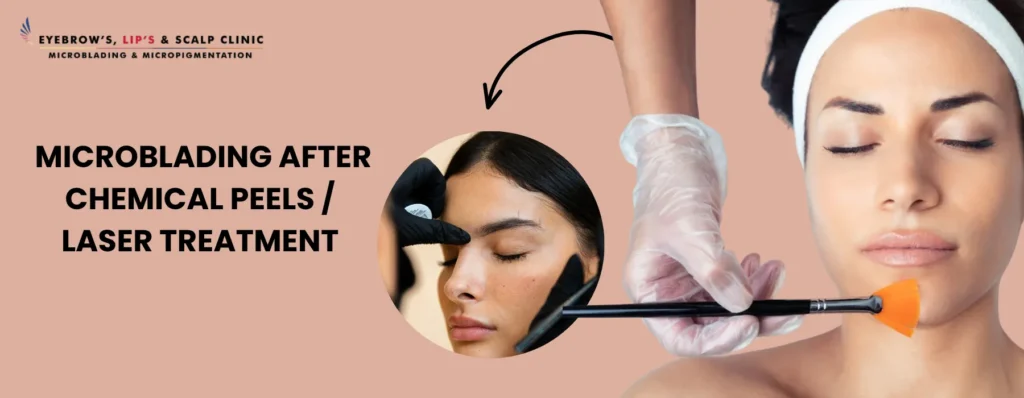
A medium or deep peel requires greater caution because the treatment affects deeper layers of skin and generally involves more significant recovery.
Medium peels may cause redness, swelling, stinging, blistering, crusting and peeling, while deep peels have a longer recovery period.
If you have undergone a medium or deep peel, do not schedule microblading simply because a calendar-based waiting period has passed. The actual condition of your skin should determine readiness.
If your dermatologist has given you specific post-peel instructions, follow those instructions first.
There is no universal number of days that applies to everyone.
A safer way to think about the timing is:
Chemical peel → complete skin recovery → professional skin assessment → microblading
For a superficial peel, recovery may be relatively short. A stronger peel may require substantially longer.
Before your microblading appointment, the skin around the eyebrows should not have:
If any of these are present, postpone the procedure and seek appropriate medical advice where necessary.
Remember that skin that has stopped visibly peeling is not necessarily identical to skin that has fully recovered. Your treatment provider can help determine whether the skin is ready.
Microblading may be possible after laser treatment, but the skin should be fully healed before the procedure.
The word “laser” covers many different procedures. A low-downtime laser treatment is not equivalent to ablative laser resurfacing.
The timing can depend on:
For example, laser resurfacing can cause swelling, itching or stinging and peeling of treated skin. The American Society for Dermatologic Surgery notes that recovery can vary according to the scope of the procedure, with laser resurfacing potentially requiring approximately 10–21 days of healing.
This situation deserves additional caution.
If the laser was used directly on or close to your eyebrows, forehead or surrounding facial skin, tell your microblading specialist exactly what treatment you received.
The specialist should know:
If the treatment was directly over the brow area, the condition of that skin becomes especially important before microblading.
There are several reasons to avoid performing microblading on recently treated or irritated skin.
Chemical peels and some laser treatments deliberately affect the skin’s surface. During recovery, the skin may be more vulnerable to irritation.
Cleveland Clinic describes chemical peeling as a controlled injury to skin layers, with recovery varying according to the depth of treatment.
Adding another procedure before recovery is complete may unnecessarily stress the skin.
Microblading relies on controlled pigment placement and healing.
If the skin is still actively peeling or regenerating, the final appearance may be less predictable.
This is one reason it is preferable to allow the skin to return to a stable condition before microblading.
Skin that is already sensitive or inflamed may react more strongly to additional cosmetic procedures.
Waiting until the skin is calm can provide a better starting point for the microblading procedure.
Some chemical peels and laser treatments can temporarily change skin pigmentation. Cleveland Clinic notes that chemical peels can be associated with temporary changes in skin color, while laser resurfacing can also involve discoloration as a possible complication.
If pigmentation changes are still developing, it may be better to wait and allow your skin to stabilize before proceeding.
It is generally better to postpone microblading while the skin is actively peeling.
Peeling is part of the skin’s recovery process after certain treatments. Cleveland Clinic explains that peeling skin can be a sign that the skin is healing after damage, and advises allowing peeling skin to shed naturally rather than picking or pulling it.
If you still have visible peeling around the eyebrow area after a chemical peel or laser procedure, inform your microblading provider.
Do not try to speed up recovery by aggressively exfoliating the skin before your appointment.
This is another important question.
Once you have completed microblading, the brows also need time to heal.
Your permanent makeup provider may recommend avoiding exfoliating products, aggressive skincare treatments, excessive sweating, swimming and direct sun exposure during the early healing phase. The exact aftercare plan should be based on the technique used and your provider’s instructions.
You can learn more about brow healing and aftercare in our guide to eyebrow tattoo aftercare.
If you are considering a chemical peel, laser treatment or another facial procedure after microblading, tell the professional performing that treatment that you have cosmetic brow pigmentation.
Understanding microblading healing helps explain why timing matters.
Immediately after microblading, the brows can appear darker and more defined than the final healed result. As the skin recovers, the appearance gradually softens.
During healing, some clients experience:
You should follow the specific aftercare instructions provided by your microblading professional.
Our microblading aftercare guide provides additional information about the healing process and common aftercare considerations.
For a broader understanding of how results can change over time, see our guide to the long-term effects of microblading eyebrows.
Yes, your individual skin characteristics can influence how you respond to cosmetic procedures.
For example, people with a history of sensitivity, pigmentation changes, prolonged inflammation or difficult healing may need a more individualized approach.
The objective should not be to rush from one cosmetic procedure to another.
Instead, the priority should be:
Healthy skin → appropriate assessment → suitable procedure → proper aftercare
This patient-first approach can help reduce avoidable complications and create a more predictable treatment experience.
Choosing the right provider matters, particularly when you have recently undergone another cosmetic or dermatological treatment.
Eyebrows Lips & Scalp Clinic is a permanent makeup clinic in Pune focused on eyebrow microblading, lip micropigmentation and scalp micropigmentation.
The clinic’s approach combines personalized consultation, brow design and micropigmentation techniques with attention to hygiene and aftercare.
The clinic is led by Dr. Shalthiel Sathe and Dr. Poonam Sathe, with the team providing customized cosmetic pigmentation services based on individual needs. You can learn more about the clinic and its team on the Permanent Makeup Clinic in Pune page.
If you are specifically researching microblading, our eyebrow microblading treatment page explains the procedure, expected results and aftercare considerations.
The clinic also offers consultation before treatment, which is particularly valuable when you have recently undergone a chemical peel, laser procedure or another skin treatment.
Yes, you may be able to get microblading after a chemical peel once your skin has completely healed. The appropriate timing depends on the peel’s depth, the treatment area and your individual recovery.
There is no single waiting period for everyone. Superficial peels can heal more quickly, while medium and deep peels generally require longer recovery. Your skin should be completely healed before microblading.
Potentially, yes. However, you should wait until the treated area has fully recovered. The appropriate timing depends on the laser type, intensity, treatment location and your healing response.
It is better to postpone microblading while the eyebrow area is actively peeling. Peeling can indicate that the skin is still recovering.
Performing microblading while the skin is still recovering may increase irritation and make healing and pigment retention less predictable. The safest approach is to wait until the skin has fully recovered.
CO2 laser resurfacing can involve significant skin recovery, including redness, peeling and crusting. Because recovery varies, microblading should be postponed until the treated skin is fully healed and your provider considers it appropriate.
You should discuss the timing with your microblading provider and the professional performing the peel. Avoid applying aggressive exfoliating treatments to healing brows unless specifically advised.
Yes, depending on the laser and whether the eyebrow area is treated. Laser treatments can affect the skin and potentially influence the appearance of cosmetic pigmentation. Always tell your laser provider that you have microbladed brows.
It is better to disclose the sensitivity and discuss it with your provider. Skin that feels unusually sensitive may still be recovering even if visible peeling has stopped.
Can you get microblading after a chemical peel or laser treatment?
In many cases, yes — but not while your skin is still healing.
There is no universal “wait exactly X days” rule because chemical peels and laser procedures differ significantly in their depth, intensity, treatment area and recovery requirements.
Before scheduling microblading, make sure:
WhatsApp us