

Tattoo Treatment for Vitiligo | Best Tattoo Removal Clinic in Pune

Reviewed by Dr. Shalthiel Sathe
Last updated: September 22, 2026
Table of Contents
Living with vitiligo means dealing with patches of skin that have lost their natural colour, and for many patients, an old tattoo sitting on or near these patches makes the contrast even harder to hide. Some people want that tattoo faded or removed because it has started reacting with their skin. Others are looking for the opposite: a specialised camouflage tattoo that restores the look of natural skin tone over a vitiligo patch. Both paths fall under the umbrella of “tattoo treatment for vitiligo,” and choosing the wrong clinic for either one can trigger new patches, uneven colour, or permanent scarring.
In over 11 years of treating pigmentation disorders and performing medical micropigmentation in Pune, we’ve guided hundreds of patients through this exact decision. This guide breaks down what actually works, what to avoid, and how to pick the best tattoo removal clinic in Pune for vitiligo-safe results.
Tattoo Treatment for Vitiligo in Pune offers specialized cosmetic tattooing to help camouflage depigmented patches and create a more even-looking skin tone. At a professional tattoo removal clinic in Pune, treatment should be planned carefully based on skin condition, vitiligo stability, and the treated area. Consult an experienced specialist to understand suitable options, expected results, and potential risks before proceeding.
What Is Vitiligo, and Why Does It Complicate Tattoos?
Vitiligo is an autoimmune skin condition where the cells that produce melanin (melanocytes) are destroyed, leaving smooth, milky-white patches on the skin. It isn’t contagious, painful, or infectious, but it is cosmetically distressing for many patients, especially when patches appear on the face, hands, or around an existing tattoo.
The complication with tattoos comes from something called the Koebner phenomenon, a well-documented reaction in which trauma to the skin (a cut, burn, laser pulse, or even a new tattoo needle) can trigger new vitiligo patches at the site of injury. This is precisely why vitiligo and tattoos need to be approached with far more caution than routine ink work.
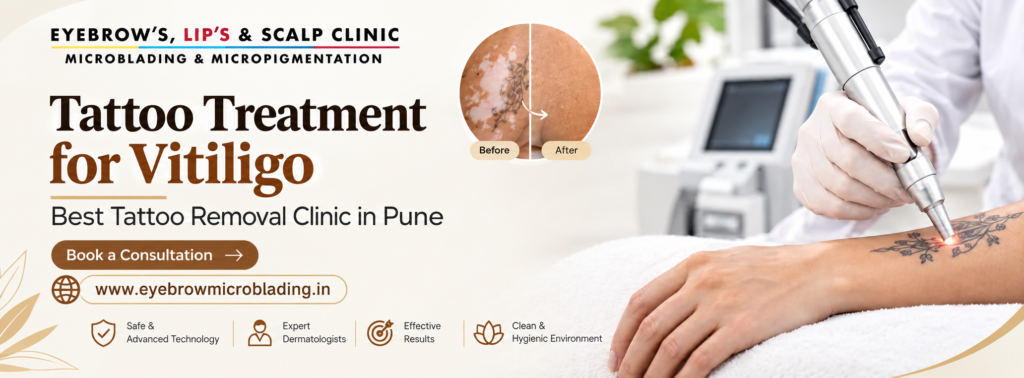
When people search for tattoo treatment for vitiligo, most are actually looking for camouflage micropigmentation, a medical tattooing technique that deposits colour-matched pigment into depigmented skin to visually restore a natural, even skin tone.
How Camouflage Micropigmentation Works
- A trained cosmetologist custom-blends pigment to match the patient’s surrounding natural skin tone.
- The cosmetologist implants pigment into the vitiligo patch using fine, controlled micro-needles, layer by layer.
- Multiple sessions are usually needed to build up even, believable coverage.
- The result blends the patch with the surrounding skin rather than “covering” it like a decorative tattoo.
Who Is a Good Candidate?
- Patients with stable vitiligo, meaning no new patches or spreading for at least 12 months.
- Patches on the hands, face, lips, or other visible areas causing distress.
- Patients who have already tried and are not satisfied with topical treatments, phototherapy, or camouflage makeup.
Patients with active or spreading vitiligo are generally not advised to undergo this procedure, precisely because of the Koebner risk mentioned earlier: the needle trauma itself could trigger fresh patches.
Tattoo Removal for Vitiligo Patients | What You Need to Know?
The other side of this topic is tattoo removal. Some patients develop vitiligo patches around or within an existing decorative tattoo years later, and understandably want the ink removed or faded. This needs to be handled very differently from routine laser tattoo removal.
Why This Isn’t a Routine Removal
- Laser tattoo removal works by breaking down ink particles with focused light energy, which causes controlled trauma to the skin, the same kind of trauma that can trigger the Koebner phenomenon in vitiligo-prone skin.
- Removing ink from within or near an active vitiligo patch can, in some patients, encourage the patch to expand.
- A dermatologist or trained specialist must assess disease activity before any laser session is planned.
What a Vitiligo-Safe Removal Process Looks Like
- A detailed skin assessment to confirm whether the vitiligo is stable or active.
- Test patches before a full session, especially for patients with a known Koebner history.
- Lower-intensity settings and longer gaps between sessions compared to standard tattoo removal protocols.
- Close monitoring after each session for any new depigmentation.
Our Approach | Years of Experience in Pigmentation-Safe Procedures
At our clinic, this isn’t a side service; it’s an area we’ve specialised in for over a decade. Every vitiligo-related case, whether it’s camouflage micropigmentation or a removal consultation, goes through the same disciplined process:
- In-depth consultation to understand vitiligo history, stability, and previous treatments.
- Patch testing before committing to a full pigmentation or removal plan.
- Custom colour-matching, since Indian skin tones vary widely even within the same family.
- Realistic expectation-setting: we tell patients upfront how many sessions to expect and what results are achievable.
- Long-term follow-up, because vitiligo is a condition that needs monitoring, not a one-time fix.
This experience-led approach is why patients travel from across Pune and neighbouring areas like Wakad, Baner, Hinjewadi, and Aundh for a second opinion before choosing where to get treated.
How to Choose the Best Tattoo Removal Clinic in Pune for Vitiligo
Not every tattoo studio or laser clinic is equipped to handle vitiligo-safe procedures. Here’s what to actually check before booking:
- Qualified specialist on-site: a cosmetologist or dermatologist with documented experience in pigmentation disorders, not just decorative tattoo work.
- Willingness to patch-test: a clinic that skips this step for vitiligo patients is a red flag.
- Colour-matching expertise: ask to see before-and-after cases specific to vitiligo, not just eyebrow or lip work.
- Sterile, medical-grade equipment: single-use needles, proper sanitation protocols, and a clean treatment room.
- Transparent session planning: a trustworthy clinic will explain the number of sessions, spacing, and cost upfront rather than promising a one-visit fix.
- Honest screening: the right clinic will tell you if your vitiligo is too active for treatment right now, rather than proceeding anyway.
What to Expect | Procedure, Aftercare, and Cost Factors
During the procedure: Sessions typically last 45 minutes to a couple of hours, depending on the size of the area. Topical numbing is used to keep discomfort minimal.
Aftercare essentials:
- Keep the treated area dry and clean for the first few days.
- Avoid direct sun exposure and swimming until fully healed.
- Apply only the aftercare ointment recommended by your specialist.
- Attend every follow-up session, as pigment settles and may need touch-ups.
What affects cost:
- Size and location of the patch or tattoo
- Number of sessions required for even coverage or full fading
- Whether it’s camouflage pigmentation, laser removal, or a combination approach
- Touch-up sessions needed after the skin heals
Because every case is different, an accurate cost estimate can only be given after an in-person consultation and skin assessment.
Risks and Precautions
Never proceed with any needle-based or laser procedure during an active vitiligo flare.
- Always request a patch test, even if the clinic doesn’t offer it upfront.
- Avoid clinics that guarantee “permanent, one-session” results; pigmentation work on vitiligo-affected skin genuinely needs multiple sessions.
- Report any new white spots near the treated area immediately to your specialist.
Conclusion
Medically reviewed by Dr. Shalthiel Sathe, Founder of Eyebrows, Lips & Scalp Clinic, Wakad, Pune. Dr. Sathe is an Aesthetic Medical Cosmetologist and Trichologist with a PG Diploma in Clinical Cosmetology (PGDCC) and BHMS, and over 11 years of hands-on experience in micropigmentation, including specialised camouflage work for vitiligo patients. To learn more about our treatments or to book a consultation, visit eyebrowmicroblading.in.
Read Blog: Vitiligo Treatment in Pune
Micropigmentation for Vitiligo
Frequently Asked Questions
Can vitiligo patches be covered with a tattoo permanently?
Camouflage micropigmentation can create a very natural, long-lasting match to your skin tone, but pigment does fade gradually over a few years and periodic touch-ups are usually needed to keep the colour looking fresh.
Is it safe to get a tattoo if I have vitiligo?
It depends on whether your vitiligo is stable or active. Stable vitiligo (no new patches for 12+ months) is generally considered safer for camouflage tattooing after proper assessment; active vitiligo carries a higher risk of triggering new patches due to the Koebner phenomenon.
Can laser tattoo removal trigger vitiligo?
In people who are already prone to vitiligo, the skin trauma from laser treatment can potentially trigger the Koebner phenomenon and lead to new depigmented patches. This is why screening and test patches are essential before removal in vitiligo patients.
Will my lips look unnatural?
No, Modern lip blush methods create a soft, natural wash of color rather than a harsh or overly painted look.
How many sessions does camouflage micropigmentation for vitiligo usually take?
Most patients need multiple sessions, often 2–4 spaced several weeks apart, to build up natural, even coverage. The exact number depends on the size of the patch and how the skin responds.
Does camouflage tattooing hurt?
Topical numbing cream is applied before the procedure, so most patients describe the sensation as mild discomfort rather than significant pain.
Will the pigment colour match my natural skin tone exactly?
An experienced specialist custom-blends pigment shades to match your surrounding skin as closely as possible, though very minor differences can appear over time as your natural skin tans or changes with seasons.
Can I remove an old tattoo if I've developed vitiligo around it?
Yes, but it should only be done after a specialist confirms your vitiligo is stable, and the removal should proceed gradually with lower-intensity settings and close monitoring.
Related Article
How do I know if my vitiligo is "stable" enough for treatment?
Stability generally means no new patches, no spreading of existing patches, and no changes in the border of patches for at least 12 months. This should always be confirmed by a specialist, not self-diagnosed.
Is camouflage micropigmentation the same as a decorative tattoo?
No. Decorative tattoos use bold ink colours for design, while camouflage micropigmentation uses carefully matched skin-tone pigments implanted specifically to blend with your natural complexion.
What should I look for in a good vitiligo tattoo treatment clinic in Pune?
Look for a specialist with documented pigmentation-disorder experience, a clinic that insists on patch testing, transparent session and cost planning, and genuine before-and-after cases of vitiligo work, not just decorative tattoos.